
You can prepare for your pet without creating a second pantry. Start with the animal’s normal routine, then keep a small, reachable reserve of the items that would be difficult to replace during a disruption. Put transport and identification items where you can grab them quickly. Rotate food and sanitation supplies through ordinary use when practical, while keeping medications, records, and species-specific equipment under their own instructions. The right reserve depends on the animal, its health, its food, and the conditions where you live. A compact plan works when it is current, protected, and built around the pet you actually care for.
Make the small-space decision first
Before buying another bin, walk through the decisions you would have to make if the pet needed to leave home or remain indoors while normal services were interrupted. Could you identify the animal? Could you move it safely? Could you provide its usual food and water, follow its medication schedule, and clean the space it uses? Could another trusted person understand the routine if you were away?
Write those answers down for each animal. A list for one dog is not a complete list for a cat, bird, reptile, fish, or small mammal. Age, body size, health, diet, behavior, and housing all change the supplies and the conditions they need. Veterinary guidance remains the right place to set quantities, medication instructions, and species-specific limits.
The Centers for Disease Control and Prevention, or CDC, includes food, water, applicable medications, feeding instructions, a carrier, leash, collar with identification, harness, bowls, sanitation supplies, and other species-specific items in a pet emergency kit. Its checklist also gives a two-week entry for food and water, a two-week entry for applicable medications, and a one-month entry for flea, tick, and heartworm prevention. Treat those as checklist guidance, not as a universal amount for every animal. Your pet’s ordinary intake, health plan, label directions, and veterinarian’s instructions govern the reserve you can safely maintain. CDC pet preparedness kit
Keep transport and identification reachable
Transport items deserve the most reachable location because they are hard to improvise when a household is already changing. Keep the carrier, crate, leash, harness, collar, and any species-specific restraint where you can reach them without moving heavy boxes. If the carrier folds, check that you can open it quickly and that the animal can use it without panic. A carrier should not become a storage container for unrelated household items.
Identification should travel with the animal and with the household records. Check that the collar or other identification remains legible and that the contact information is current. Keep a recent photo and the animal’s identifying details with the records. If a chip is registered, confirm the registration information through the responsible registry. These checks are small, but they matter if the animal is separated from you.
For a fuller record of identification, transport details, and documents, pair this supply plan with the pet evacuation record. The record can hold information that does not belong on a collar, including feeding details, medical contacts, and a description another person can use.
Do not put all records in one exposed place. Keep a waterproof paper copy with the transport supplies, and keep a protected digital copy where an authorized household member can reach it. Veterinary records contain private information, so store them with the same care you would give other sensitive household documents. The protected copies of key documents page can help you choose a storage approach without leaving records loose in a carrier or open on a shared device.
Separate daily-use supplies from the reserve
Small homes work better when the reserve is part of a routine rather than a hidden duplicate closet. Put food that the animal already eats into normal rotation when the packaging and storage conditions permit. Mark the date you opened or stored it, use the older usable item first, and replace it through the next normal purchase. This helps you notice changes in diet, packaging, appetite, and expiry dates before the supply is needed.
Keep the reserve together enough to check, but do not force every item into one container. A carrier may need to stay near an exit. A food container may belong in a cool cabinet. A leash may be easiest to reach near the door. A medication may require a different temperature, light level, or handling routine. Use labels or a short inventory to show where each item lives.
Date the reserve and set a review point that follows the labels and the animal’s routine. Food, treats, litter, cleaning materials, medication, preventives, batteries, and containers can have different limits. Follow the product label for temperature, light, opening, and expiration conditions. Replace or discard an item when the label, appearance, storage history, or veterinarian indicates that it should no longer be used.
Store food and records away from water, pests, direct contamination, and unsafe heat. A waterproof container can protect paper and dry goods from a leak, but it does not make every item safe in every location. Check the actual temperature and moisture conditions of the storage point. Keep bowls, litter tools, cleanup supplies, and bedding clean and ready for use, and keep waste materials away from food and medication.
Adapt the list to the species and the animal
The useful question is not “What does a standard pet kit contain?” It is “What does this animal need to keep its ordinary routine as safely as possible?” Use the prompts below as a review conversation with your veterinarian or a qualified species-specific professional, not as a substitute for that advice.
Dogs
Record the dog’s usual food, water routine, feeding instructions, leash or harness preference, and any behavior that affects transport. Include waste bags and a way to clean the animal or its space. A dog that cannot tolerate a certain food, restraint, or handling method needs that limit written down. If the dog takes medication or a preventive, record the name, dose, frequency, storage direction, and prescribing contact separately.
Cats
Cats often need a carrier, familiar bedding, food and water, litter, a litterbox, litter scoop, and cleanup supplies. Record the litter and food the cat accepts, since a sudden change can make a stressful move harder. Check that the carrier is intact and that the cat can enter it. Keep the carrier accessible rather than buried under seasonal items.
Birds
Ask a qualified avian professional about food, water, cage or travel housing, perches, lining, temperature, humidity, and safe handling. A bird’s enclosure may be part of its daily environment, while a separate travel carrier may be needed for movement. Record what signs show that the bird is becoming overheated, chilled, or unwell, and keep the contact information for the professional who manages its care.
Reptiles and amphibians
Housing, heat, humidity, lighting, substrate, water quality, and transport can vary sharply by species. Do not assume that a general pet list covers these needs. Ask a qualified species-specific professional how to maintain the animal’s conditions during an interruption, which equipment can safely be moved, and how to respond if the usual water source is affected.
Fish
Fish care can depend on tank conditions, water treatment, temperature, filtration, and species. Record the normal feeding routine and the equipment that keeps the tank stable. Ask a qualified aquatic professional about interruption planning, transport, and what to do if the household water is contaminated or under an official advisory.
Small mammals and other animals
Small mammals may need particular bedding, nesting material, food, housing, and temperature control. The same is true for animals kept outdoors or in specialized enclosures. Write an adaptation prompt for each animal: What is its normal food? What housing does it need? What conditions are unsafe? What would a caregiver need to know before the animal is moved? Use the answers to revise the inventory and ask for professional guidance where the answer affects health.
Use a layout that fits your home
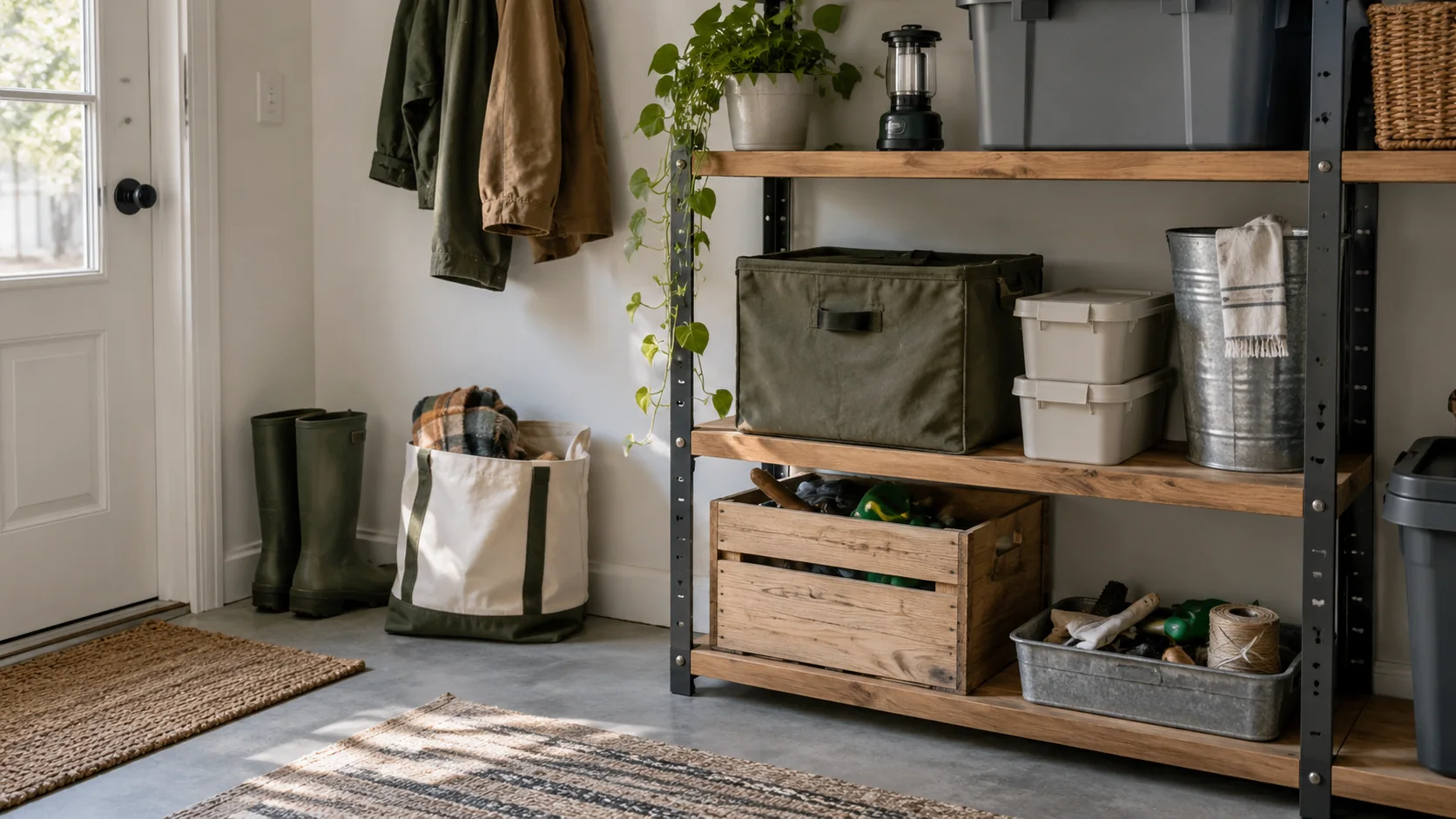
There is no universal small-home arrangement, but a simple layout can show how to keep supplies reachable without adding a duplicate closet. For example, one household might keep a folded carrier and leash in a clear area near the entry, a dated food reserve in a cool cabinet, a waterproof records pouch on a high shelf, and species-specific bedding or litter in the place where those supplies are already used. Medications may stay in a separate location that meets their label directions. A short card on the inside of the cabinet door can point to each location.
That arrangement is only an example. A home with young children, a service animal, pests, dampness, extreme heat, or limited mobility may need another setup. Test the route from the pet’s usual space to the transport items. Make sure the carrier is not blocked, records are private, and no one needs to lift a heavy item to reach a leash or medication. If another person may help, show them the layout and give them the routine note.
The pet care handoff note is useful when a trusted person may need concise instructions. Keep it current with feeding, medication, handling, contact, and warning details. It should support the fuller records, not replace them.
Keep medications and records under their own rules
Medication is not ordinary reserve stock. Do not ration a prescribed medication, change a dose, or substitute a human medication because storage is inconvenient. Follow the label and the veterinarian’s directions. Ask the veterinarian or pharmacist about refills, an emergency supply, storage, and what to do if a dose is missed. Write the medication name, dose, frequency, route, prescribing contact, and storage limit where a caregiver can read them.
Preventives also need their own schedule and storage conditions. Check the label before placing them in a warm cabinet, damp area, vehicle, or travel bag. Keep medications and preventives away from food, heat, direct light, and children or animals who might reach them, unless the label or professional instructions require another arrangement.
Veterinary records can include private details about the animal and household. Protect paper records from water and unauthorized access. Protect digital copies with the access controls your household already uses, and decide who is allowed to share them with a clinic, boarding facility, shelter, or caregiver. A record is useful only if the right person can reach it when needed.
Safety boundaries to keep beside the supplies
Medication: Follow the label and veterinarian’s instructions. Ask a veterinarian or pharmacist before changing a dose, replacing a medicine, or planning for a missed dose.
Unsafe heat: Do not leave an animal, carrier, medication, or food in a location that exceeds its safe conditions. Ask a qualified professional about the animal’s heat and humidity limits, especially for birds, reptiles, amphibians, fish, and animals with health conditions.
Contaminated water: If officials warn that water is contaminated or unsafe for the animal, follow the official instruction and ask a veterinarian or local animal-health authority about safe water and care. Do not assume that boiling or filtering makes every contaminant safe for every species.
Active evacuation order: Follow responsible officials and leave when instructed. CDC recommends identifying pet-friendly lodging, alternate routes, and a trusted person who can care for the animal if the household is away. Keep the carrier, identification, records, routine note, and necessary supplies ready before movement begins. CDC guidance for pets during a chemical emergency
Review the reserve without buying twice
Once you have written the one-animal inventory, test it during an ordinary day. Can you find every transport item without opening several boxes? Can you identify the food and medication schedule? Can you tell which supplies are in rotation and which are reserved? Can someone else follow the instructions without guessing?
Use the animal’s normal feeding and care routine to replace what is used. Record the date and location of items that are not in daily use. Review food, water, sanitation supplies, bedding, records, carriers, and identification on a schedule that fits the labels and the animal’s routine. Review medication and preventives according to their instructions, and confirm refills before the current supply becomes short.
If the household includes a working animal, add the access and handling needs that make its role possible. The service animals and emergency planning resource can help you think through the animal’s routine, handler information, transport, and access needs without treating a working animal like a generic pet.
Frequently asked questions
Should every pet have the same reserve amount?
No. Food, water, medication, housing, and sanitation needs depend on the animal’s species, size, health, diet, and normal routine. Use general checklist guidance as a starting point, then set a realistic reserve with the animal’s labels and professional instructions.
Can I store all pet supplies in one waterproof bin?
Not always. A waterproof container can help protect records or dry goods, but medication, food, bedding, carriers, and equipment may have different temperature, light, moisture, access, and handling requirements. Keep an inventory that shows the locations rather than forcing every item into one bin.
What should I do if the pet’s usual food is unavailable?
Keep the animal’s normal food in rotation when practical and ask a veterinarian about a change before an interruption makes a sudden switch unavoidable. Record allergies and foods to avoid, and do not treat a general pet list as permission to substitute a diet that may harm the animal.
How do I prepare records without exposing private information?
Keep a waterproof paper copy and a protected digital copy, and decide which trusted people may share them with a clinic, shelter, boarding facility, or caregiver. Store records where the authorized person can reach them without leaving sensitive details open to everyone in the household or building.
What is the next check for a small home?
Read the one-animal inventory aloud while locating each item. Confirm that the transport route is clear, the supplies are protected from water and unsafe heat, labels and dates are current, and a trusted caregiver can follow the routine.
Keep the plan compact and current
The next useful step is one animal at a time. Write the normal food, water, medication, carrier, identification, sanitation, housing, and handling needs. Choose reachable locations that fit the home, set a review date based on labels and the animal’s routine, and use daily supplies in rotation when safe. This leaves you with a compact reserve that reflects the animal’s real life, avoids duplicate buying, and remains ready to use when the household needs it.