
When a phone is uncharged, a signal is unavailable, or a route changes during an event, a small paper-based kit can keep a household oriented. Start with the places your household actually uses, then pair a dated local map with printed route cards, a pencil, a reachable light, paper contacts, and the charging or batteries that fit the equipment. Keep current official alerts in charge of travel decisions. A paper kit supports a decision, but it cannot confirm that a road, bridge, shelter, clinic, or transit service is open.
Give the kit a household job
The job is not to carry every possible tool. It is to help someone answer a few practical questions: Where are we starting? Where are we going? What is another reasonable destination? Whom do we call or notify? What information can we still use if a device fails?
Begin with two or three ordinary destinations. These might include a pharmacy, a relative’s home, a child-care location, a veterinary clinic, a workplace, or a known public meeting place. A household with pets may need a separate animal destination. A person who uses a wheelchair, walker, hearing aid, or other support may need route notes that mention an entrance, transport option, or communication format that works for them. You do not need to publish or carry those private details in every copy. Put only what the people using the kit need.
Use what you already have before buying anything. A current road map, a school supply pencil, a permanent marker, a small ruler, a headlamp from a drawer, and a card with agreed contacts can form a useful first version. FEMA’s Emergency Supply Kit Checklist names local maps, a flashlight, extra batteries, an extra phone battery or charger, and a battery or hand-crank radio as possible kit items. The household can add pieces when a real task shows that a gap matters.
Choose a map that shows the task
Choose the map after naming the destinations. A city or county road map may be easier for ordinary household travel than a detailed terrain sheet. A regional map can make sense when family, work, or care destinations are farther away. The paper must be large enough for the person using it to read names and follow the streets without holding several small pieces together.
Write the map’s edition or print date on its cover or margin. Roads, bridges, buildings, transit stops, and access points can change. A date does not make the map current forever. It gives the household a clear reason to compare the map with current official information and replace it when the important places or routes change.
USGS US Topo maps use a 1:24,000 scale and show features such as transportation, water, elevation, boundaries, structures, and geographic names. That level of detail can help someone understand symbols and terrain, but it may not be the most convenient choice for every household trip. The USGS map symbol guide explains the information those maps are designed to show. If your household relies on a street map, learn its scale and legend instead of assuming every line means a passable road.
Folded maps can be hard to open in a car or dark room. A protected, flat copy may be easier to mark and read. Keep a pencil for changes that may be temporary and a permanent marker for a label that should remain. Do not write account numbers, passwords, or a complete identity record across a map that may be carried outside the home.
Turn destinations into route cards
A route card is a short paper record, not a promise that a route will remain open. Make one for each likely destination. Include the starting point in household terms, the destination name, the date prepared, key turns or landmarks, one alternate destination, and a line that says to verify conditions before leaving. If a vehicle, transit service, or accessible entrance matters, record that condition in plain language.
Keep the instructions readable to someone who did not write them. “Leave by the east entrance and call the listed contact after arrival” is more useful than a string of personal shorthand. Include a place for the person carrying the card to write a changed destination or a time to check back. A route card can support a calm handoff when one household member is unavailable, but it cannot authorize travel.
Add alternate routes only when the household understands why they are alternatives. A second line on a map is not automatically safer or open. An alternate might avoid a bridge, use a different transit stop, or reach a second pharmacy. Mark the reason and the condition that would make it useful. When an official warning, evacuation instruction, road closure, or shelter order conflicts with a card, follow the current authority. An essential trip during a shelter-in-place emergency explains why a paper route does not override an active instruction.
Know what a compass can and cannot do
A small compass may help orient a map or confirm a general direction when landmarks are hard to see. It cannot report a closure, flood, fire perimeter, damaged bridge, or current traffic. Metal objects, vehicles, power equipment, and other magnetic interference can affect a reading. Declination also varies by place and changes over time, so a compass and map need to be used within their stated limits.
If a compass belongs in the kit, write down its basic purpose on the card and keep the task modest. The household may use it to compare a map’s north with the surrounding area, not to claim that an unmarked route is safe. Compass basics for emergency travel can help with map orientation, magnetic limits, and declination before you depend on the tool.
Keep contacts useful and private
Paper contacts should help a person communicate when a phone is lost, damaged, locked, or out of power. List the people and services the household has agreed to use, such as a relative, an out-of-area contact, a caregiver, a school, a veterinarian, a property manager, or a utility. Add the household’s chosen way to confirm a changed destination. Do not invent emergency numbers. Use the official emergency service for immediate danger when a call is possible.
Write a preparation date on the card and give each named person a clear role. A number without an instruction may not help when plans change. Keep a copy with the paper map and another in a protected location that household members can reach. The household contact sheet can help organize paper and digital contact records while leaving the household in control of what is shared.
Identification and medical information deserve a narrower approach. A sealed copy of an identification document, a medication list, or an essential care note may help when a phone is unavailable, but a general kit does not need every account number, password, or document. Carry only what the person using it needs, protect it from casual access, and decide who is allowed to open the copy. Review the contents when a prescription, caregiver, address, or household need changes.
Include formats people can use
The kit works only if the intended user can read, hold, hear, and act on it. Large print, high contrast, a magnifier, tactile marks, and a simple layout may help one household member. Another may need written alerts because audio is not accessible, while someone else may need a caregiver copy or a way to confirm information without a phone call. The CDC communication resources describe multiple ways to share emergency information, and ADA.gov’s emergency planning guidance emphasizes planning for access needs.
Ask the person who will use the item what works in ordinary conditions. A small type size that looks tidy may fail in low light. A route card that depends on color may not work for every reader. Keep an accessible version beside the standard copy rather than treating accessibility as a special add-on. If a pet depends on a person who is unavailable, include a clear handoff note and the contact needed for that care.
Match light and power to the task
Put the light where the household can reach it without searching in darkness. A hands-free headlamp can leave both hands available for reading, carrying, or assisting someone. A wider area light may be more useful for a room. The right choice depends on the task, the person using it, the battery or charging system, and the maker’s current specifications for runtime, weather exposure, and replacement.
Keep compatible spare batteries with a battery light, or keep the exact cable and adapter with a rechargeable light. Do not assume that two products using the same connector charge in the same way. Energizer recommends storing flashlights in a cool, dry, accessible place and avoiding high temperatures in its flashlight care guidance. Follow the instructions for the specific light, test it with its intended power, and replace batteries or cables when the household changes equipment.
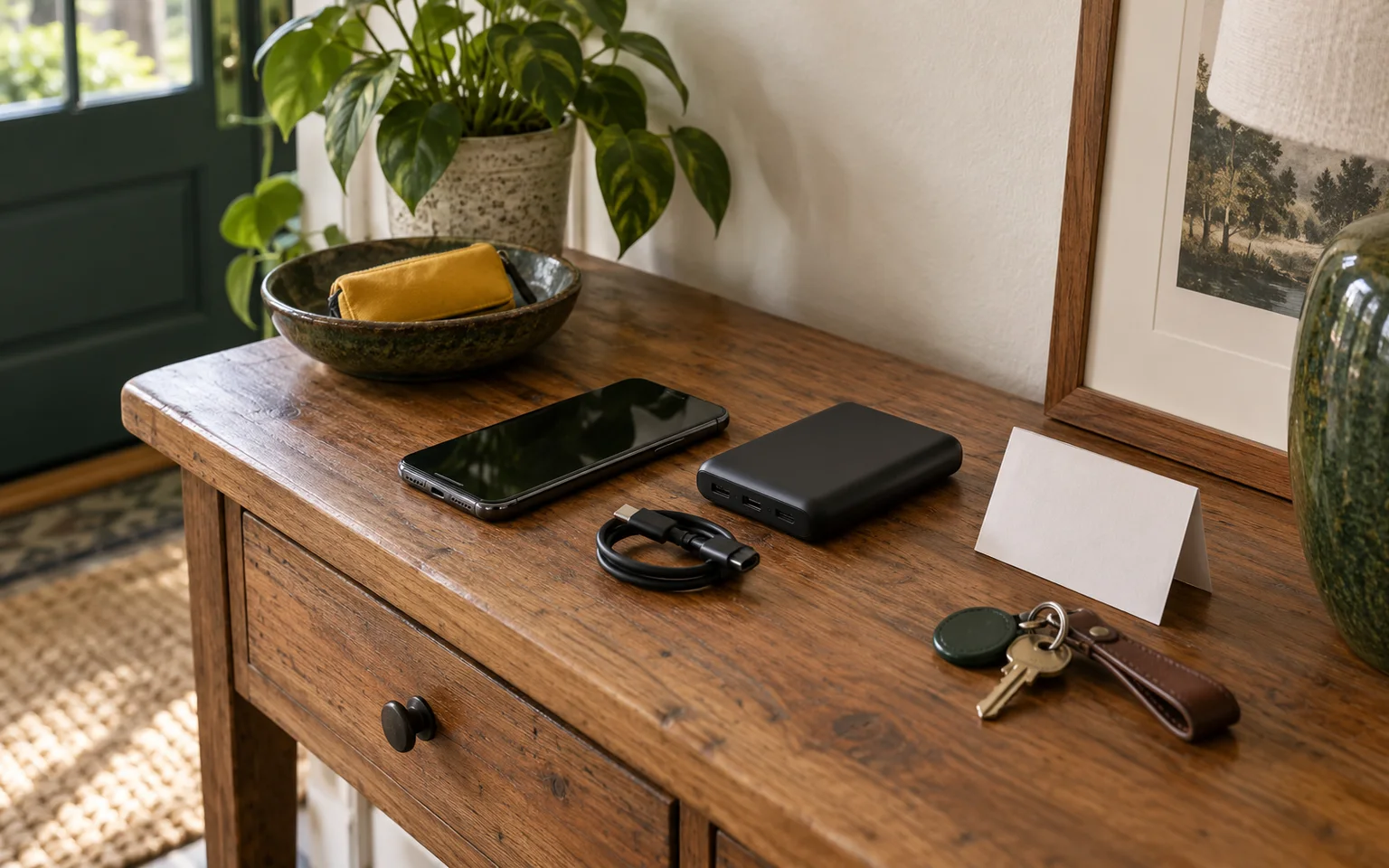
A backup battery may keep a phone available for an alert or a call, but its capacity, ports, charging input, temperature limits, and device compatibility determine what it can do. It does not create a signal or guarantee a runtime. If a phone-charging unit is part of the kit, Battery banks and outage communication can help you compare it for communication rather than treating it as a general power supply.
Keep official information in charge
Paper is useful when a device is unavailable, but it cannot show a new closure or warning. When any network, radio, or alert channel works, use the current instruction from the responsible emergency-management agency, utility, transportation authority, shelter, school, or other official service. A radio, flashlight, map, and contact card support communication and orientation. None of them replaces an evacuation direction, a shelter instruction, or emergency services.
Write the names of the official alert channels the household already uses on a separate card. Avoid copying old warnings into a route card as though they remain active. If someone leaves, tell the chosen contact the destination and the route being attempted when communication is possible. If conditions change, pause and confirm before continuing. Immediate danger calls for emergency services when a call can be made.
Store it where it can be used
Keep the main kit in a known, reachable place. Protect paper from moisture, but do not seal it in a container that takes tools or several steps to open. A small copy can live near the place where the household commonly starts a trip, while the main map and copies of contacts stay with the broader household supplies.
Label the outside with a neutral name that helps the household find it without displaying private information. Keep a pencil, marker, and spare light power with the papers. If a person cannot reach a high shelf, place a usable copy at their height or make a clear handoff plan. Practice finding and opening the kit during an ordinary day. That practice shows whether the setup is reachable, but it does not prove that a route will be open during an event.
Review the kit when the household changes
Review the kit when the household moves, a destination changes, a road project affects access, a transit stop closes, a pet’s care plan changes, or a mobility or communication need changes. Review it when a map, light, battery, radio, cable, or official alert method is replaced. A calendar can prompt a look, but the condition that changed is the reason to update the card.
During the review, read one route card aloud, check the map date and destination names, test the light with its intended power, confirm the contact roles, and remove private information that no longer belongs. Ask a second household member to find the kit and explain the route card. Correct unclear wording while the conditions are ordinary.
Frequently asked questions
Does every household need a special map?
No. Choose a current local or regional road map that shows the household’s actual destinations and that the intended user can read. A detailed terrain map may help with symbols and land features, but it may be less practical for ordinary trips.
Should route cards include one route or several?
Give each card a primary route and an alternate only when the household knows the reason for the alternate. Date the card and verify conditions before leaving, because neither route is a live report of closures or official instructions.
Is a compass enough when a phone is unavailable?
A compass can help orient a map and confirm a general direction. It cannot identify a safe or open road, and magnetic interference and local declination can affect its use.
How much identification should go in the kit?
Carry only information that the person using the kit may reasonably need, such as a protected identification copy or an essential care note. Leave out passwords and unnecessary account numbers, and decide who may access the copy.
Where should spare batteries be kept?
Keep the correct battery type or charging accessory with the light or radio, in a cool, dry place that the household can reach. Follow the product’s instructions for storage, polarity, charging, and replacement rather than treating all batteries or devices alike.
Your next check
Choose one real household destination, make a dated route card with an alternate, place it beside a readable local map, add a paper contact card and a task-matched light, then record where current official alerts will be checked before travel. That gives the household an offline starting point without pretending that paper information can replace the authority controlling conditions on the ground.