

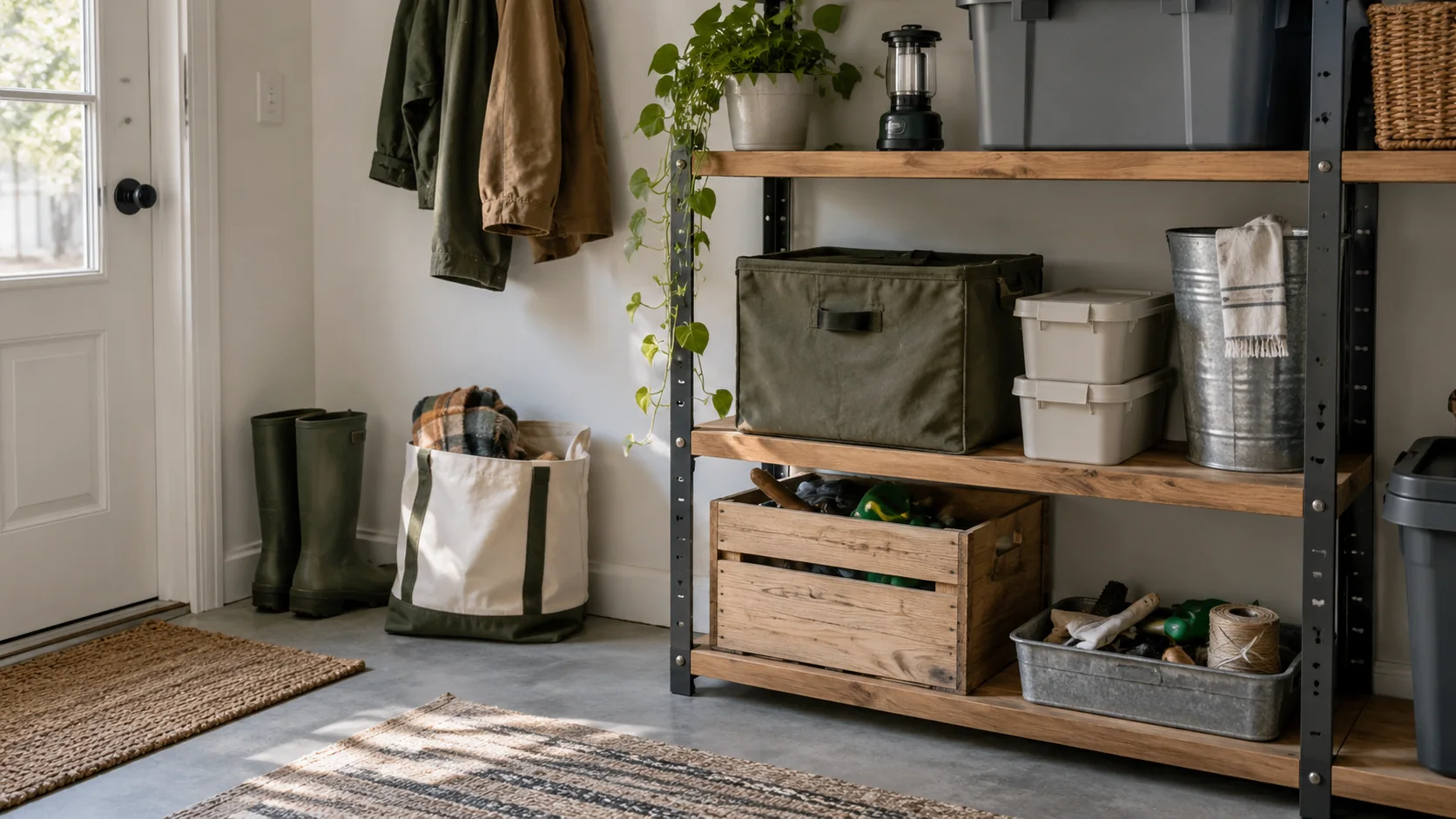
Organize household supplies around the person and task that will use them. Start by choosing a clear location for each need, such as leaving the home, finding a flashlight, taking medicine, feeding a pet, or preparing food. Keep the route to that location open, label it in a format the people in your home can use, and place hazards or private records behind the right protection. Then ask another household member to find an item without coaching. That small test shows whether the arrangement works in practice without treating one shelf, bin, or label system as accessible or safe for everyone.
Start with tasks, not containers
A general container labeled “emergency supplies” can make a cupboard look orderly while leaving the contents hard to use. Group items by a job your household actually performs. Departure items might include keys, a paper contact list, a flashlight, and essential records. Lighting and communication may need a different location from food and water. Medicines and care supplies, pet items, cleaning products, and documents each have different privacy, access, and storage needs.
Write down the task before choosing a shelf. Ask who may need the item, when they may need it, and what must remain out of the way. A person who uses a mobility aid may need more floor clearance and a lower reach. Someone with limited vision may need large, high-contrast print or a tactile marker. A person who does not read the household's main language may benefit from symbols, a translated label, or a short audio instruction. These choices belong to the people who will use the supplies, not to a standard layout.
The U.S. Access Board describes reach ranges and clear-floor principles for covered accessible storage in its ADA Accessibility Standards. Those provisions do not create one required arrangement for every private home. Use the household member's actual reach, transfer, vision, hearing, dexterity, language, and communication needs. If a consequential barrier remains, seek advice from a qualified accessibility professional.
Keep routes and exits clear
An item is not easy to find if reaching it means stepping over a box or moving a heavy object from an exit path. Walk from the sleeping areas and main living spaces to each supply location. Look for narrow turns, loose cords, low objects, and doors that cannot open fully. Keep a clear path to the home's exits and do not use a hallway, stair, or landing as overflow storage.
The U.S. Fire Administration recommends planning more than one way out of a home and keeping escape routes clear in its guidance on home fire escape plans. That plan concerns leaving safely, so convenience storage must yield when it conflicts with an exit. A room-by-room check can help you connect supply locations with doors, stairs, and other constraints. A room-by-room home readiness walk-through gives that storage and exit check a separate place in your routine.
Do the walk at the time of day when the household is most likely to need the items. Check the path with the lights on and with the usual mobility aids, footwear, or carrying load. Do not assume that a route works because one person can move through it quickly. If a supply location becomes blocked, move the supply before adding another label or container.
Use labels people can understand
Labels should answer a practical question: what is here, and who may use it? “Lighting and phone power” says more than “kit.” “Pet medicine, ask caregiver” protects privacy and gives a boundary. Keep the wording short, use a consistent place on each bin, and repeat the same name on a paper list. A basic marker and paper can be enough when a printed system is not in the budget.
Use large print, high contrast, tactile cues, symbols, or audio support when those formats help the people in your home. One household may use words and symbols together. Another may need a label that can be felt in low light. Keep any digital list available offline, and place a paper copy where an authorized backup user can reach it. Do not put a full medication list, diagnosis, access code, or identity detail on an exposed label.
Short instruction cards can explain an item without turning the storage area into a manual. Include the action that a backup user may take, the action they should avoid, and where to ask for help. For equipment with a model-specific procedure, keep the current instructions with the item. Do not copy a generic instruction onto a card if it could conflict with the product label.
Protect medicines and private records
Medicine needs two kinds of organization: the person who is authorized to use it should be able to identify it, and children or visitors should not be able to take it casually. The FDA advises keeping medicines in their original containers, in a cool, dry place or as the label says, and out of children's reach in Over-the-Counter Medicines: What's Right for You?. Follow the current label for the particular product. Ask a pharmacist or clinician about an individual medicine's storage or use.
A visible counter may help one adult remember a dose, but it can expose medicine to a child, visitor, heat, or moisture. A reminder container may support a routine but does not replace child-resistant or locked storage when that protection is needed. Choose a location that balances authorized access with privacy and hazard control. If another person helps with medicines, tell that person where the protected record and instructions are kept without leaving the record open to everyone.
Store prescription information, diagnoses, access codes, identity documents, and caregiver details separately from general supplies. A shared list can say that protected records are in a locked drawer or other agreed location. It does not need to display the full information on a pantry door. Protecting copies of key documents can help you assign a private place and a backup person for records without mixing them into an open supply bin.
Separate child, pet, and household hazards
Matches, lighters, fuel, chemicals, batteries, sharp tools, and pet medicines need storage that follows their safety directions. A high shelf is not automatically protective if a child can climb to it, a pet can reach it, or a heavy item can fall. Use a locked or otherwise secured location when the product instructions or household situation calls for it. Keep chemicals in their original containers and do not transfer them into food containers.
Make the boundary visible to a backup user. A label can say “do not open without caregiver” or “keep away from food,” but a label cannot replace a physical barrier when a child or animal could reach the item. Keep pet medicines apart from human medicines so the containers are less likely to be mixed up. Follow the product label and veterinarian guidance for species-specific storage and use.
Pet care often depends on details that are easy to lose when one person is away. Record the animal's name, feeding instructions, medicine directions, veterinarian contact, and any handling limit in a protected note. Give the note to the people who may care for the animal, while keeping private contact or medical details out of public view. A pet care handoff note can support that conversation.
Respect food and temperature conditions
Food storage must serve both the person who prepares it and the conditions the food requires. Put frequently used items where the intended cook can reach them without lifting a heavy box or crossing a blocked route. Keep foods for infants, allergies, medical diets, and pets clearly separated when a mix-up could matter. A short label can name the diet and the person or animal it belongs to.
Follow the product label for temperature, moisture, light, and handling. The FDA says pet food should remain in its original packaging when possible, and dry pet food should be stored in a cool, dry place in its guidance on proper storage of pet food and treats. Separate animal diets so one pet does not receive another's food by mistake. Do not assume that a pantry, garage, vehicle, or basement has the same conditions throughout the year.
Keep food away from cleaning chemicals, fuel, and medicines. If a container has been opened, use the label's handling direction and mark the opening date when that information helps the household use it correctly. A paper rotation note can sit on the outside of a cupboard without displaying private medical details. When temperature or moisture changes, move the affected food and reconsider whether the location still fits the product.
Store weight and stability with care
Heavy supplies belong low enough that they can be lifted without pulling an unstable stack toward the person. Keep a full water container, large bag of food, or dense equipment off a high shelf when its weight could cause injury or make the shelf unstable. Use the furniture or storage unit's instructions for its load and anchoring. Do not stack items in front of an exit or in a place where a fall would block a path.
Put lighter, frequently used items where the intended user can reach them without standing on a chair. A step stool can introduce a new risk for someone who has limited balance, so test the actual task and choose another location if needed. Leave enough clear floor for turning, transferring, opening a door, or carrying an item. If a shelf wobbles, a bin is hard to pull out, or a lid needs more grip than the user has, change the arrangement instead of asking the person to work around it.
Make a small home work
Limited space does not require one large supply station. Use a few small locations that match the tasks: a protected medicine area, a low lighting and communication drawer, a food shelf, a pet-care bin, and a private document location. The same room can hold several groups if they have separate labels and the items do not create a hazard for one another.
Use the inside of a cupboard door for a short paper index only when the door can open fully and the information is appropriate to share. Store flat records in a folder, and use a small container for items that must stay together. Keep the floor clear rather than filling every corner. If a needed item has no safe location, reduce duplication, move it to a different room, or ask the people who use it what can be combined. Do not place convenience ahead of a clear exit, privacy, child protection, or the product's storage condition.
Give backup users a real role
An owner may know every location, but another household member may be the person who needs to act. Tell that person where the supplies are, which items are private or hazardous, and what should happen if an item is missing. A short conversation can cover more than a label when the task involves medicine, a pet, a mobility aid, or a device with specific instructions.
Then run a simple test. Ask the backup user to find a flashlight, a paper contact list, a pet-care note, or another ordinary item. Watch without correcting them. If they must move a box, open the wrong container, cross an exit path, or read private information to identify the item, revise the location or label. The someone else can do it test provides a focused way to test findability while keeping the person's needs in view.
Repeat the test after a new medicine, pet, child, caregiver, mobility change, renovation, or seasonal hazard. A household arrangement is a working plan, not a permanent claim about what every person can use. Ask the person affected what changed and make one adjustment at a time. When a barrier has consequences for health, mobility, or safety, ask the relevant pharmacist, clinician, veterinarian, fire authority, or accessibility professional for advice within their role.
Questions about household organization
Should all preparedness supplies stay in one place?
No. Separate locations can make a small home easier to use when each one has a clear task, label, and safe route. Keep the household index simple so people know which location holds lighting, food, care supplies, pet items, and records.
What label works for every household member?
There is no single label format that fits every person or task. Combine words, large print, high contrast, tactile cues, symbols, translated wording, or audio support according to the people who will use the supplies.
Where should medicine go during a household disruption?
Keep each medicine in its original container, in the place and conditions stated on its current label, and out of children's reach. Use locked storage when needed for the household, and ask a pharmacist or clinician about an individual product rather than changing its conditions by guesswork.
Can a high shelf protect chemicals and pet medicine?
Not by itself. A child may climb, a pet may reach, or an item may fall, so use the product's safety directions and a secure barrier suited to the household.
How often should the arrangement be tested?
Test it when the household changes, such as after a new medicine, pet, child, caregiver, mobility change, renovation, or seasonal hazard. If nothing changes, a practical check can still reveal a blocked route or label that no longer makes sense to a backup user.
Your next check
Choose one essential task today and assign it a location, a label, and a backup user. Walk the route, protect any hazard or private record, and ask the backup user to find the item without coaching. Keep the arrangement if it works without a new risk, or make one small change and test it again. The goal is a household that can locate what it needs while respecting the people, animals, products, and spaces involved.