

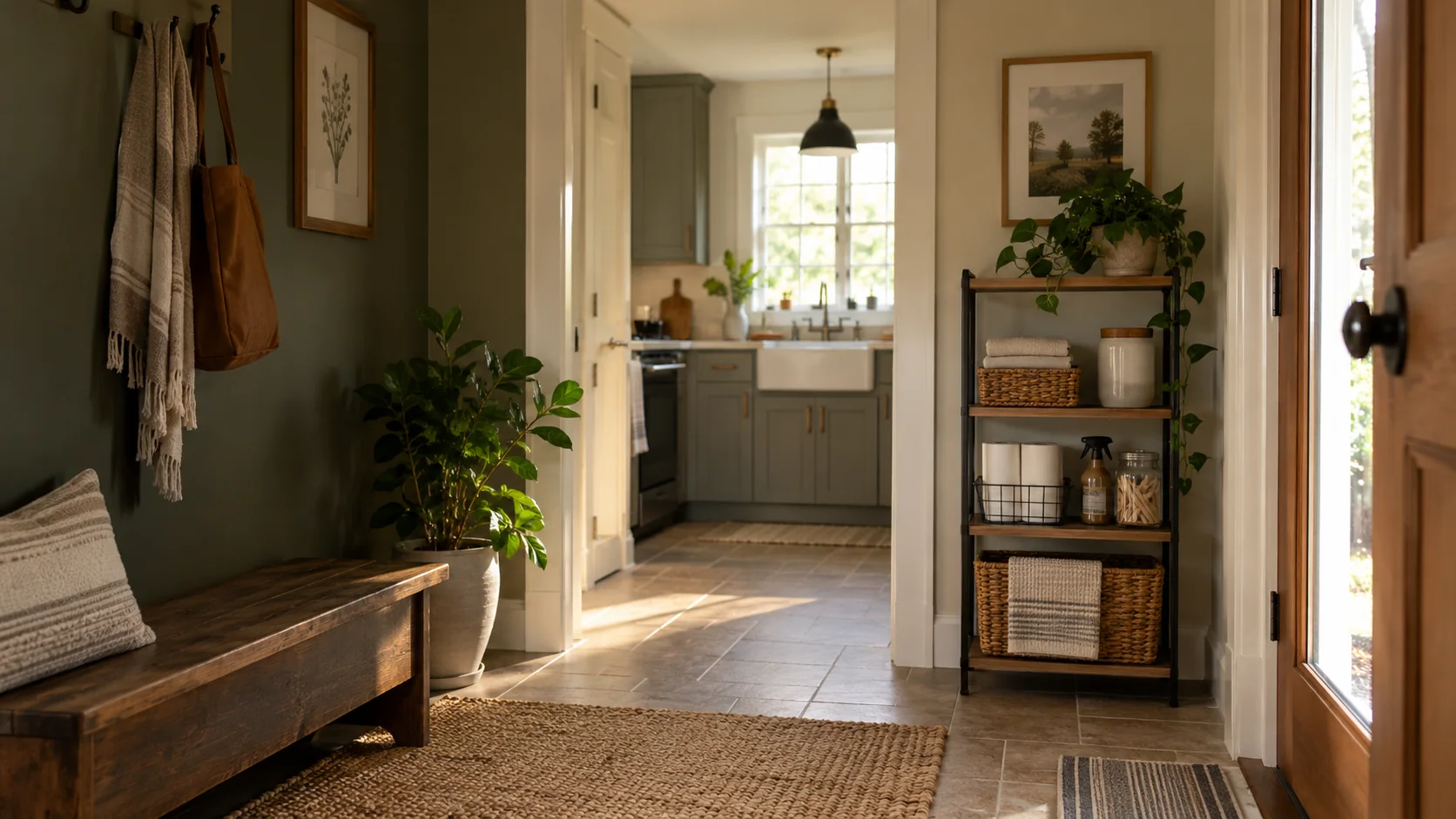
A useful home readiness walk-through starts with what you already have, what can block a safe exit, and what each person or animal needs to find quickly. Walk through the home before buying supplies. Notice doors, windows, alarms, lighting, appliances, storage conditions, communication needs, and the location of essential items. Write down one or two changes that would make the home easier to use. If you see damaged wiring, smell gas, find structural damage, or see flooded equipment, leave the area as appropriate and contact the utility, fire department, emergency authority, or a qualified professional. Do not treat a household walk-through as an inspection or a pass-or-fail test.
Begin with the way out
Start at the front door, then stand in each room and look for the paths a person would use if the usual route were blocked. The U.S. Fire Administration recommends making a home map that shows doors and windows, identifying two ways out of every room, keeping exits clear, choosing an outside meeting place, and practicing with everyone in the household. Its home fire escape plan guidance also notes that people in high-rise buildings should know the exit stairs and follow fire-department directions. Do not use an elevator during a fire unless the fire department directs you to do so.
Look at the details that make a route usable. Do doors stick or need a key from one side? Are stairs, ramps, and halls clear at night? Is there a light that works without relying on a phone? Can everyone reach the meeting place, including a person who uses a mobility aid or a child who needs help? A meeting place can change when a street, building, or usual landmark is unsafe, so write down a second practical option. A meeting place that can change can help you think through that decision.
Fire alarms deserve an early look. Smoke alarms belong on every level and inside and outside sleeping areas. Test them as directed by the manufacturer. If the home has possible carbon monoxide sources, CO alarms belong on each level and outside sleeping areas, with placement and replacement handled according to the alarm instructions. Use the U.S. Fire Administration fire safety checklist as a prompt, then follow the device manual and local fire authority for the actual alarm requirements in your home.
Keep matches, lighters, candles, fuel, and chemicals away from children and pets. Keep cooking areas clear and never leave cooking unattended. These are observations to make before you decide whether more equipment belongs in a cupboard. An alarm that cannot be heard from a bedroom, a blocked window, or a key that no one can find may deserve attention before a large supply purchase.
Walk from the entry through shared spaces
The entry tells you how the household receives information and moves supplies. Note where keys, flashlights, shoes, weather gear, and communication devices are kept. The item does not need a special container if an ordinary, reachable place works. What matters is whether the person who needs it can find it when the light is poor or the household is busy.
Move through halls, stairs, and common rooms at the times they are most likely to be used. Look for rugs, cords, furniture, boxes, and decorations that narrow a path or create a fall hazard. Check whether a person with limited vision can tell where the route turns, whether a person with hearing loss has a way to receive an alert, and whether instructions are available in a form the household can use. If another household member might need to help, ask them to locate a few essentials without being coached. The someone else can do it test gives this idea more room.
This is also a good point to notice communication gaps. A phone may be charged in one room while the person who needs it sleeps in another. A hearing or visual alert may work in one location but not reach the bedroom. Record the actual need and the next safe improvement. Do not assume that one alarm, one device, or one meeting place works for every person.
Kitchen: heat, food, and water
In the kitchen, start with fire and carbon monoxide risks before inventorying food. Check that cooking areas are clear, alarms can be heard or otherwise received, and the household knows where a fire extinguisher is located. Read the extinguisher instructions and local fire guidance for its use. Do not use an appliance that has been flooded or damaged until the utility or a qualified professional says it is appropriate.
Notice how the refrigerator and freezer are monitored. A thermometer can show what the appliance is doing during a power interruption, while a manual can opener can matter when an electric opener cannot be used. These observations do not tell you how long food remains safe. Food decisions depend on the appliance, the food, the temperature, and current food-safety guidance. If water availability affects food preparation, medication routines, or pet care, follow the applicable local authority during an active event.
Look at storage height and access. Heavy containers on a high shelf may be hard to lower safely. Cleaning chemicals, matches, and sharp tools should not be reachable by a child or pet. A supply placed in front of an electrical panel, appliance shutoff, or exit solves one problem while creating another. If a cupboard is crowded, move the items that matter most to a reachable location before buying more of the same kind.
Bedrooms and sleeping areas
A bedroom walk-through is about waking, understanding what is happening, and reaching an exit. Check whether the smoke alarm can be heard from the bed. Some households may need a visual alert, a vibrating device, a reachable phone, or another arrangement that fits the person using it. The U.S. Fire Administration information for older adults can prompt questions about mobility, hearing, vision, and the time needed to leave, but the household must adapt the plan to its actual needs.
Place glasses, shoes, mobility aids, and essential medication where the person who uses them can reach them without crossing a cluttered path. A phone or alert device needs a practical charging arrangement. A child may need a simple explanation and a known adult to help them. A pet may hide, resist handling, or need a carrier that is stored within reach. Write down the actual arrangement rather than assigning a generic label to the household.
Close doors and look toward the exit from the bed. Note any furniture that would slow movement, then correct the problem if you can do so safely. Never block a window or door with stored supplies. An item that is useful during a disruption still needs to leave the escape route clear.
Utility and appliance areas: observe, do not experiment
A utility room, basement, garage, or outdoor equipment area can contain serious hazards. Locate utility shutoffs only if the household understands the utility's instructions and can reach the controls safely. Do not test, reset, or manipulate gas, electric, or water systems after damage or flooding. Ask the utility or an appropriate emergency authority what to do, and use a qualified professional for technical defects.
Generators and engine-driven tools need particular care. The Consumer Product Safety Commission says never to use a generator inside a home, garage, basement, shed, or other partially enclosed area, and its generator and engine-driven tool guidance explains the carbon monoxide danger. A walk-through can identify where equipment is stored and whether the intended operating location would be outdoors and away from openings, but it cannot make an unsafe location suitable.
Look at extension cords, fuel containers, heaters, and appliances without turning the inspection into a repair project. Note damaged cords, unusual smells, water exposure, missing labels, or a storage location that could expose fuel to heat or children. Put the concern and its next authority on the record. Do not improvise a shutoff procedure or use a damaged device because it is the only one available.
Bathrooms, living rooms, and shared care
Bathrooms and living rooms may become places for drinking water, medication routines, rest, communication, and care. Check lighting, floor traction, clear paths, temperature control, and privacy. Notice whether a caregiver or another household member can locate the items needed for hygiene or assistance. If a person needs a device, medication, or support item at a particular time, record where it is kept and who can help if the usual person is unavailable.
Heat and cooling can change what a home plan can support. This walk-through does not establish an indoor safety threshold or replace current instructions from local authorities. It should show you what information is missing, such as a way to receive an alert, a reachable water supply, or a plan for a person who cannot safely use the stairs. Follow local evacuation or shelter directions when they apply.
Keep private records private. A household plan may include medication information, disability-related details, access codes, contact information, or documents for a child. Record only what the people who need to act will use. If you photograph labels, model numbers, shutoffs, or room conditions, do so only when it is safe and avoid including names, addresses, account numbers, or other details that could expose the household.
Storage areas: protect supplies without creating a new hazard
Pantries, closets, garages, basements, balconies, and sheds need a different set of questions. Notice moisture, heat, flood exposure, shelf weight, flammable liquids, fuel, pests, and access by children or pets. Check whether a container could leak onto other supplies. See whether a shelf could tip or whether a box would fall into a doorway during movement. Do not store an item where it blocks an exit, a stair, an electrical panel, or equipment that must remain accessible.
Limited storage does not require a large reorganization. Start with the supplies already used in ordinary life and place them where the right person can find them. Grouping a flashlight with its batteries, keeping pet supplies near the carrier, or placing a paper contact sheet where it can be reached may solve a specific problem. Making essential items easy to find can help with the storage follow-through without turning every household into the same layout.
Use labels that make sense to the people in the home, including someone who may need to help during a disruption. Keep a record of expiration dates or maintenance dates when those dates affect use. Do not treat a label or container as protection from every condition. Follow the product instructions and store water, food, medicine, fuel, and chemicals according to their specific requirements.
Turn observations into small, safe decisions
The walk-through becomes useful when each observation leads to a clear next step. Write four short notes: what you noticed, who or what it affects, the immediate risk, and the next safe action. For example, “Flashlight is in a high cupboard, used by a person who cannot reach it, move it to the entry shelf” is more useful than “buy an emergency kit.” “Gas smell near the appliance, everyone leave the area and contact the utility or emergency authority” is a safety response, not a storage task.
Give urgent hazards priority over organization. Damaged wiring, gas odor, structural damage, carbon monoxide concerns, and flooded equipment require the appropriate authority or qualified professional. Do not wait to finish the room list, and do not test a damaged system to collect more information. Keep local evacuation and shelter instructions in charge when an event is underway.
After the first pass, choose one or two improvements that fit the money, space, and time available. You might clear a path, move medication, add a way to receive an alert, protect a record, or label a shutoff without touching the system. Revisit the home after seasonal changes, repairs, new equipment, a new household member, or a change in mobility, medication, pet, or power needs. A monthly household readiness check can provide a regular point for that review.
Questions readers often ask
These questions cover common decisions that come up after the first walk-through.
Does every room need two exits?
The U.S. Fire Administration recommends identifying two ways out of every room, using doors and windows as appropriate. Your home map should show the actual routes and keep them clear, while local fire guidance and the building's design determine how those routes work.
Should I test an appliance after flooding?
No. Do not test or manipulate a flooded or damaged gas, electric, or water system. Contact the utility, emergency authority, or a qualified professional for instructions before using it.
Where should a generator go?
A generator belongs outdoors and away from the home and its openings, according to the CPSC guidance linked above. Never run one in a home, garage, basement, shed, or other partially enclosed area because carbon monoxide can build up quickly.
What should I record during the walk-through?
Record the observation, the person or animal affected, the immediate risk, and the next safe action. Model numbers and shutoff labels can help when recorded safely, but protect medication details, access information, account numbers, and other private records.
How often should I repeat it?
Repeat the walk-through after a seasonal change, repair, new appliance, new household member, or change in mobility, medication, pet, or power needs. A monthly review can catch changes earlier, but the timing should fit the home's actual needs.
Make the next check concrete
Walk through the home with a pencil and the people who may use the plan. Mark the exits and alarms first, then choose one or two changes that improve access, communication, storage, or ordinary care. Keep technical and urgent hazards with the utility, fire department, emergency authority, landlord, inspector, or qualified tradesperson that can address them. The result is a clearer view of the home you have and a practical next step before you buy more supplies.