

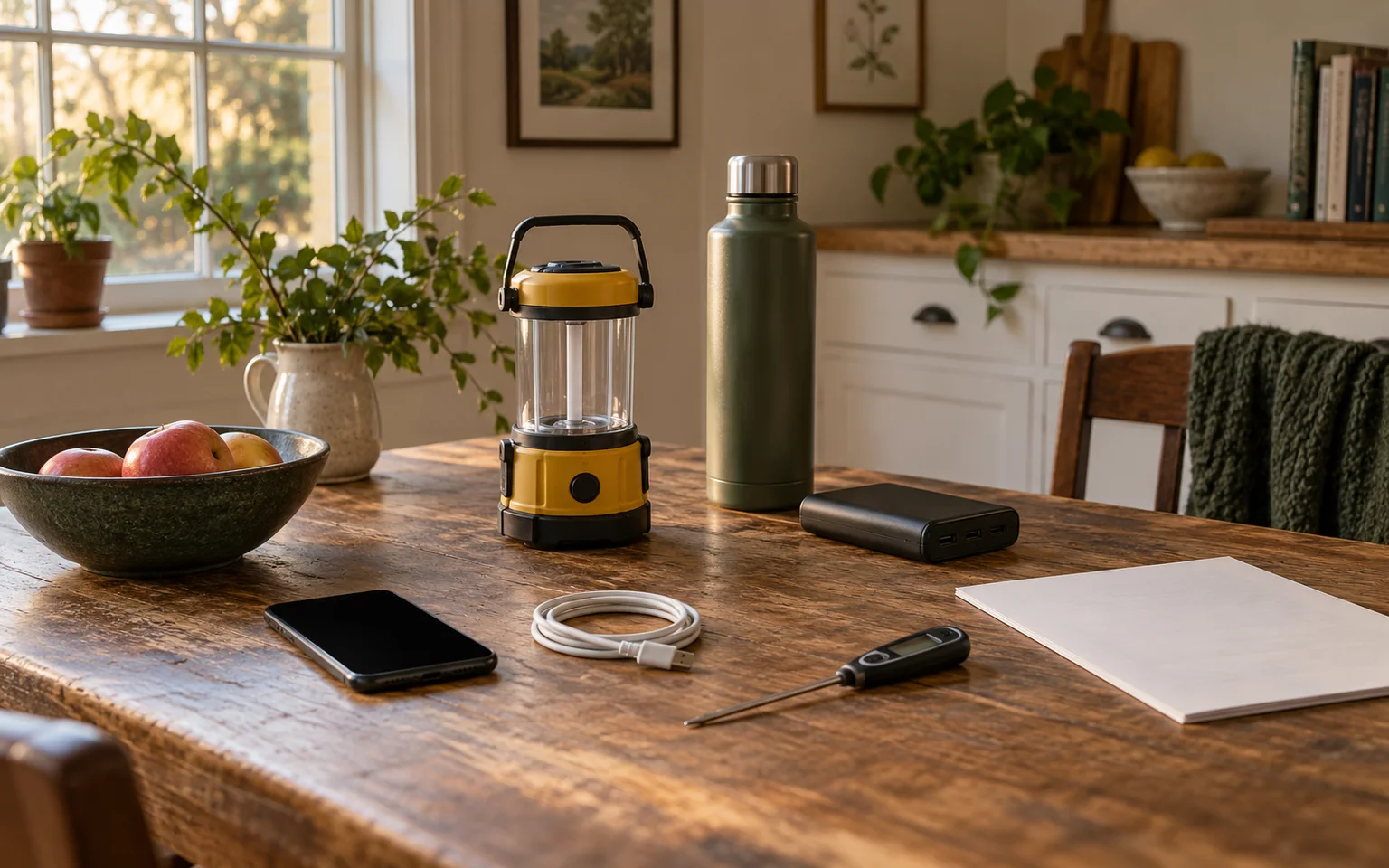
Choose a household light by the job it must do, the person using it, and the space where it will be stored. A handheld flashlight works well for directing a beam during a short inspection while keeping your other hand available. A headlamp puts light where you look, a lantern spreads light through a shared area, and a hybrid may combine more than one role. The right choice depends on control, balance, grip, visibility, batteries, charging, and the exact limits printed for that model. Brightness and stated runtime are useful details, but neither is a promise for every condition.
Start with the task and the person
Begin with a real household task. You might need to look at an electrical panel, move through a dark hallway, read a label, check on a child or pet, or keep a table lit while several people work. Write down what has to happen before comparing light output. The task tells you whether you need a narrow beam, a broad area, both hands, a low-glare setting, or controls that can be used without fine finger movement.
The user matters just as much. A child, older adult, caregiver, pet handler, person with limited grip or vision, or person wearing gloves may need a different switch, strap, weight, beam, or shape. A headlamp can leave both hands free, but a strap may be difficult to adjust or keep in place. A handheld light may be easier to point, yet it occupies one hand. A lantern can be convenient for a shared room, but it may be awkward to carry while walking.
Storage is part of the decision. Keep a light where the intended user can reach it without climbing or searching in darkness. If the light will sit beside a bed, a large lantern may not fit. If it will stay in a vehicle or an unheated storage area, temperature limits in the manual matter. A small home can use one light for several tasks, but keep a backup when one failure would leave someone without a safe way to move, read, or call for help.
For a broader household kit, pair the light with the paper contacts, route information, and other non-network items described in this offline household kit. A light is one part of a plan, not the plan by itself.
Compare the main formats
Each format solves a different problem. Treat the descriptions below as starting points, then compare the exact model's instructions and controls.
Handheld flashlight
A handheld flashlight gives you direct control over where the beam points. It is useful for checking a doorway, reading a meter, inspecting a leak, or walking a short route when you want to aim light at a particular surface. A tail switch, side switch, lockout, or mode button can change how easy it is to use. Test the switch with the person who will rely on it, including while wearing gloves if that is likely.
The tradeoff is that one hand holds the light. If you need to carry a pet, steady yourself, hold a paper, or use a tool, a handheld format may be less convenient. A pocket-sized model may fit a small storage space, while a larger body may be easier for someone with limited grip. Size alone does not tell you which is easier to operate.
Headlamp
A headlamp directs light toward the wearer's view and can leave both hands available. It can help with a two-handed task, reading close to a surface, or moving while carrying something. The strap, tilt adjustment, control layout, and weight affect whether it stays comfortable and pointed where needed.
Headlamps need special care around eyes. Do not stare into a high-intensity beam or aim it at another person's eyes. The exact Petzl TIKKA instructions include eye-safety warnings and distinguish standard from rechargeable batteries, charging limits, damaged-battery warnings, and storage conditions for that model. Those details belong to the TIKKA instructions, not to every headlamp, so read the manual for the model you own.
Lantern
A lantern is designed to spread light through an area. It can help several people share a table, sort supplies, or keep a room gently lit without aiming a beam at each task. Check how it is carried, where the controls sit, whether it has a stable base, and whether the light level can be lowered.
A lantern can take more shelf space than a compact flashlight. Its broad light may also create glare on glossy surfaces or make it harder to direct light into a small opening. If you need to move between rooms, consider whether the handle and weight are comfortable for the intended user.
Hybrid lights
Some lights combine a forward beam, area light, headlamp attachment, or USB charging. A hybrid can reduce the number of items you store, but it also brings more controls and more possible failure points. Confirm which modes work at the same time, how the battery is replaced or charged, and whether the manual allows the device to operate while connected to power.
Do not assume that a hybrid's multiple modes make it a better fit. A simpler light with a control the user can operate may serve the household more reliably than a feature-heavy model that stays in a drawer.
Use a comparison table before buying or assigning a light
Record the details for each exact model. A table helps you compare what matters to the task rather than choosing by a single output number.
| Question | Why it matters | What to record |
|---|---|---|
| What is the main task? | Inspection, movement, reading, and shared work need different beams and positions. | Task, surface, distance, and whether both hands are needed |
| Who will use it? | Grip, vision, balance, gloves, and comfort affect operation. | Switch type, weight, strap, handle, tilt, and beam control |
| How does it get power? | The plan changes if charging is unavailable or spare batteries are hard to store. | Battery chemistry and size, quantity, charger, input, and compatible replacements |
| How long does it run? | A stated figure applies to a mode and test condition. | Mode, output, runtime, temperature condition, and battery condition |
| Where will it be stored? | Heat, moisture, access, and available space affect readiness. | Dimensions, temperature limits, water or dust rating, and location |
| What happens when it fails? | A backup reduces dependence on one device. | Backup format, spare power, and who can reach it |
Record the model number with the table. If a package lists several modes or runtimes, copy the mode and condition beside each figure. A brighter setting can use power faster, while a lower setting may be more suitable for reading or a shared room. The label cannot tell you how every household member will handle the device, so include a hands-on test.
Treat runtime and weather ratings as conditional
Manufacturer runtime is a test result for a stated mode and condition. It may not match a cold room, old batteries, maximum output, or a device being used to charge another item. Treat the figure as a comparison point, then test the light with the intended batteries or power source. Note how the beam and controls behave as the battery gets low.
An ingress or weather rating is also specific. It does not make every part of a light safe in every environment. Read the instructions for water exposure, charging while wet, cleaning, operating temperature, and storage. Keep a rechargeable device dry before charging unless its exact manual permits the situation. Do not transfer a rating from one model to another because the housings look similar.
Petzl's TIKKA instructions are a useful example of why model-specific reading matters. They identify battery options, charging limits, storage conditions, and warnings for damaged batteries. If your light is a different model, use its own instructions for those limits.
Plan batteries, charging, and replacement
Use the size, chemistry, polarity, charger, and replacement battery specified by the manufacturer. Do not recharge a non-rechargeable battery, mix old and new batteries, mix battery types, or use a damaged rechargeable battery. A rechargeable light needs a compatible power source and a charging routine. A disposable-battery light needs compatible spares and a dry, accessible place to keep them.
For rechargeable lights, identify the cable or charger and the power source you would use during an outage. If that power source is a battery bank, keep the bank's capacity and connector limits with the light's instructions. The battery-bank comparison can help you think through shared USB power without treating one capacity as a universal answer.
For disposable batteries, label the spares by size and chemistry and keep them with the equipment they fit. Follow the light's instructions for battery removal and storage. Energizer's flashlight-care guidance advises removing exhausted batteries and keeping lights accessible. Duracell's battery FAQs likewise describe room-temperature, dry storage. Keep batteries and lights away from direct sunlight and heat.
If a battery or light becomes hot, develops an odor, swells, leaks, or makes an unusual sound, stop using it and follow the manufacturer's directions. Do not open, repair, modify, or improvise a battery or charger. The US Fire Administration's battery fire safety guidance advises following manufacturer guidance, choosing certified products, watching for warning signs, and using an appropriate local collection option for recycling.
Make access and eye safety part of the test
Test the switch, grip, strap, battery door, charger, and mode controls with the intended user. Try the controls in normal lighting first, then place the light where it will be stored and confirm that the user can retrieve it. Test whether the user can tell when the light is on, change modes, and replace or connect the power source without forcing a latch or twisting a difficult cap.
Consider low-vision needs without assuming a particular medical condition. A larger switch, tactile difference between controls, stable base, wider handle, or less reflective beam may help. A person who cannot use a strap may prefer a handheld or lantern. A caregiver may need a light that can be operated while carrying another item. Ask the intended user to demonstrate the task, then adjust the choice to what they can actually do.
Keep beams away from faces. A high-intensity beam can cause discomfort or temporary loss of visual adaptation, and Petzl's TIKKA instructions include a warning about looking into certain beams. Use the lowest useful setting for close work and shared rooms, and give children direct instructions about where the beam may point. Do not describe a model as child-safe unless its exact instructions and design support that claim.
Store, test, and check recalls
Store the light where it is reachable, labeled, and protected from heat and moisture within the model's stated limits. Keep spare batteries with their labels visible. If a rechargeable light must be charged in a particular position or place, include that requirement in the storage note. A small card with the model number, battery type, charger, and manual link can prevent a hurried substitution later.
Test the light on a regular household schedule. Turn it on, cycle the controls, inspect the lens and housing, look for corrosion or leakage, confirm the strap or handle is intact, and verify that the spare power still fits. The monthly household readiness check provides a place to include this task with other supply and equipment checks. Test again after moving the light, changing its battery type, or assigning it to a different user.
Before relying on a model, check the manufacturer's current notices and the Consumer Product Safety Commission recall pages for that exact model number. A recall status can change, and a general product family name may not identify the affected unit. If a recall applies, follow the stated remedy and use another light until the issue is resolved. Do not guess that an older model is covered or cleared because a similar model is not.
Build a modest household setup
You do not need identical lights in every room. Start with the tasks that would be hardest if the room were dark. A handheld light near an entry or electrical panel may serve inspection work. A headlamp may suit a person who needs both hands. A lantern may help a shared table, while a simple backup light can cover a dead battery or misplaced device.
Give each light a named place and a power plan. If several lights use different batteries or cables, label the differences rather than assuming everyone will remember them. Keep one backup that the household can operate without the usual owner. The goal is a workable choice for the task and user, with clear limits and a safe way to restore power.
Frequently asked questions
Is a headlamp better than a flashlight for a power outage?
Neither format is better for every task. A headlamp leaves both hands available, while a handheld flashlight may be easier to aim at a particular surface or share with another person. Choose by the task, the user's controls and grip, and the storage and power plan.
Can I use any rechargeable battery or USB charger with a light?
Use only the battery size, chemistry, polarity, charger, and input specified for the exact model. Do not improvise a replacement or charge a damaged or wet device when the manual does not permit it.
Does a longer stated runtime mean a light will last longer at home?
The stated runtime applies to a named mode and test condition. Temperature, battery age, output setting, and the power source can change actual operation, so test the light with the power you plan to keep.
How should I store spare batteries?
Keep them in a cool, dry place away from direct sunlight and heat, with the size and chemistry visible. Remove exhausted batteries from a light and follow the manufacturer's storage directions for rechargeable packs.
What should I do before relying on an older flashlight?
Record its exact model number, inspect the housing and battery compartment, test every control, and confirm that the batteries and charger match the instructions. Check current manufacturer and CPSC recall notices for that model before making it part of the household plan.
Make the next check
Choose one household task and one intended user. Compare a handheld, headlamp, lantern, or hybrid against the table, then record the exact model's power, runtime conditions, weather limits, storage requirements, and recall status. Put the light where it can be reached, provide compatible power, and test it on the household's regular check schedule. That simple review leaves you with a lighting choice that fits the work in front of you without treating brightness or runtime as a guarantee.