
When the usual stove, oven, microwave, or electricity is unavailable, begin by avoiding improvised combustion. If you do not have a device approved for the place where it would operate, a no-cook meal is the lower-risk choice. Keep food at safe temperatures, use safe water and clean utensils, and decide early whether another kitchen or a community shelter is more suitable. A generator, charcoal grill, lantern, or portable camping stove must never be used inside a home, tent, or camper because fuel-burning equipment can produce carbon monoxide, an odorless gas that can cause sudden illness and death.
Start with food that needs no heat
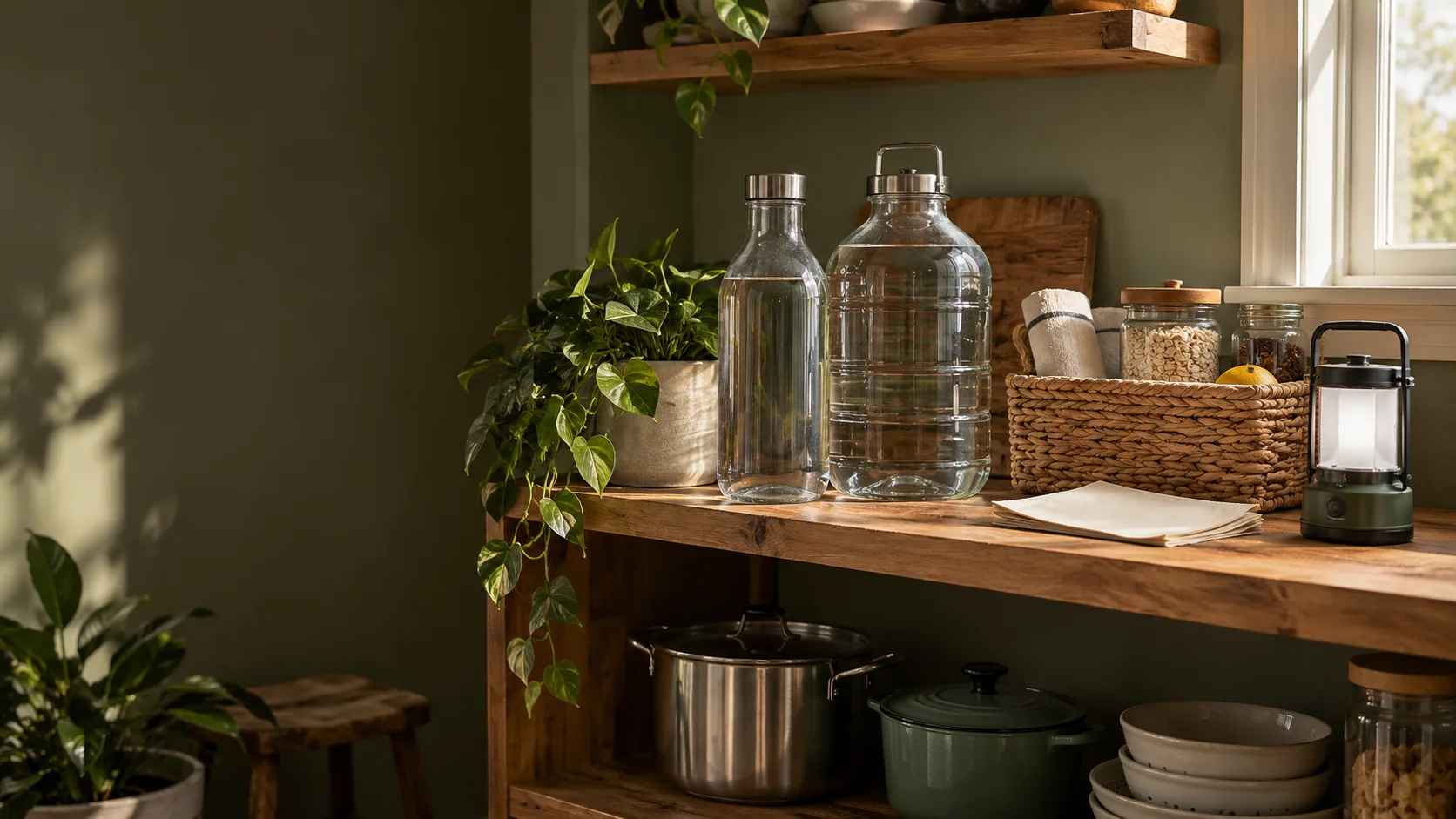
A no-cook plan gives your household a useful option while you decide what equipment, if any, fits the situation. Choose foods that can be eaten as packaged, along with drinking water and utensils that can be cleaned safely. Keep a manual can opener where everyone who may prepare food can reach it. Lighting matters too, since cooking decisions become harder when the room is dark or cords are in the way.
The food should fit the people who will eat it. Account for infant feeding, allergies, medical diets, texture needs, and foods that household members can open and handle. Keep pet food and water available, and do not ask an animal to stay near a hot surface or fuel. A no-cook meal is not a sign that a plan has failed. It can let you protect people, animals, and the home while conditions are uncertain.
If the outage affects refrigeration, review Refrigerated food after a power loss before deciding what to keep. Food that looks or smells normal can still require a temperature decision based on its history. Keep a way to monitor food temperature, and separate food that has been exposed to flooding, fire, or another contamination route.
Keep fuel-burning equipment outdoors
The location boundary comes before any equipment discussion. The CDC power-outage guidance says never to use a generator, charcoal grill, hibachi, lantern, or portable camping stove inside a home, tent, or camper. Opening a window or door does not turn an indoor location into an approved cooking area, and a carbon monoxide alarm does not make indoor use acceptable.
Carbon monoxide can affect people and animals without an obvious smell. Possible symptoms include headache, dizziness, weakness, nausea, vomiting, sleepiness, confusion, chest pain, and loss of consciousness. If you suspect carbon monoxide, move every person and animal into fresh air, then call 911 or Poison Control at 1-800-222-1222. Do not stay inside to search for the device or investigate the alarm.
The same boundary applies when the house is cold. Never use a gas range or oven to heat the home. If indoor heat or cold becomes unsafe, follow local emergency instructions and seek a safer place with friends, family, or a community shelter. A cooking problem can become a sheltering decision when the indoor environment no longer supports the household.
For a portable generator, the CPSC guidance for generators and engine-driven tools places it outdoors at least 20 feet from the home, away from doors, windows, and vents, with exhaust directed away. Its manual controls electrical connections, weather limits, refueling, and grounding. A generator is not a universal cooking solution, and it should never be modified for backfeeding or used as a reason to bring combustion indoors.
Charcoal grills and hibachis also produce carbon monoxide after the coals appear quiet. The CPSC charcoal guidance supports keeping them out of homes and other enclosed spaces. A portable camping stove is not approved for indoor cooking merely because it is small or convenient. If a propane appliance is part of your plan, its fuel type, location, ventilation requirements, clearances, weather limits, and shutdown instructions come from the exact manual and local fire or fuel rules. Do not transfer fuel or assemble a substitute appliance from parts that were not designed to work together.
Check the device before you choose it
Begin with equipment the household already owns and knows how to operate. Before an outage, read the exact manual and write down the device's approved location, fuel, clearances, ventilation requirements, weather limits, refueling conditions, and extinguishing or shutdown steps. Confirm that fuel is available through a lawful, current supply route and that local rules permit the planned use. General advice cannot approve a specific model or a specific building.
Keep the operating area stable and clear. Children and pets need distance from flames, hot surfaces, fuel, and cords. The person using the device should be able to see the cooking area, reach the controls, and respond without moving around obstacles. If a household member has limited mobility, vision, hearing, reach, or hand strength, choose a food plan that does not depend on that person handling heat or fuel alone. Include a backup person who knows where the manual and supplies are kept.
Fuel storage also depends on the product label, manual, and local rules. Keep fuel in its approved container and in the location those instructions permit, away from children, pets, heat, flames, and living areas. Do not bring a fuel container into a room simply because the appliance is not running. Check containers for damage before use, and replace or dispose of them according to the applicable local instructions.
The household power plan should cover more than cooking. A household power-outage plan can help you place lighting, water, food, medications, and communication tasks in the right order. A power bank can help with alerts and contact, but Battery banks and outage communication does not turn a battery into a universal cooking system. Keep communication available so you can follow current emergency-management, utility, and fire-authority directions.
Stay with heat and know the fire response
Once approved equipment is in its approved setting, stay with the food while frying, boiling, grilling, or broiling. The U.S. Fire Administration cooking-fire guidance identifies unattended equipment as a leading factor in nonconfined home cooking fires. Turn the burner off before leaving, keep pot handles away from the edge, and keep the area free of items that can catch fire.
For a small pan fire, turn off the burner if you can do so without reaching through flames. Cover the pan with a lid or flat metal sheet and leave it covered until it is cool. Never move a burning grease pan and never add water to it. If flames escape the appliance or the fire spreads, leave immediately and call 911 from outside. Do not return for food, fuel, a pet, or equipment until emergency personnel say it is safe.
The device's manual may add steps for shutting down fuel or cooling a surface. Follow those instructions when they do not conflict with an emergency evacuation. Do not improvise a repair, change a fuel connection, or use a device in a weather condition outside its stated limits. Smoke, a damaged container, a tipped appliance, or a control that does not work is a reason to stop and move people away, not a reason to try another arrangement.
Protect food temperatures and water quality
Cooking does not restore food that has been exposed to unsafe temperatures, flooding, fire, or contamination. USDA FSIS advises keeping perishable food at 40°F or below and a freezer at 0°F or below. The USDA emergency food-safety guidance can help you make decisions based on the type of food, its temperature history, package condition, and exposure.
When those conditions are not known, do not rely on appearance or on a plan to cook the food later. Use food-specific USDA or FDA guidance and discard food when the safety conditions cannot be established. Keep raw and ready-to-eat foods separate, and use water that is safe for drinking and food preparation. A no-cook option still needs clean hands or utensils, suitable water, and attention to dietary boundaries.
The safest choice can change over the course of an outage. A device that is approved for one location may be unsuitable after wind, rain, smoke, flooding, or a change in the household's ability to supervise it. Reassess before every use. If conditions change, return to packaged foods or move the meal to another approved kitchen rather than creating a new fuel arrangement.
Decide when to use another kitchen or shelter
A household plan does not require you to cook at home in every situation. Use a friend or family member's kitchen, a community kitchen, or another location identified by local emergency management when that option is safer and available. Follow current local alerts for evacuation, shelter, utility, fire, and weather directions. Do not assume a community location has the same food, accessibility, pet, or medical-diet support as your home. Ask what the location can accommodate before traveling when time allows.
Leave the home when fire spreads, carbon monoxide is suspected, or indoor conditions become unsafe. Take people and animals into fresh air after a suspected CO exposure and call for help. If heat or cold inside the home is becoming dangerous, Heat, cold, and the limits of a home plan can help you think through the boundary between staying and leaving. Follow the order given by current local authorities when it differs from a general household plan.
If you need to leave, take only what supports the next safe decision, such as medications, essential dietary items, pet supplies, water, and contact information. Do not delay an evacuation to finish a meal or retrieve a cooking device. A meal can be replaced. A fire, CO exposure, or unsafe indoor temperature needs immediate action.
Questions households ask
These short answers address common equipment and food decisions without replacing the exact manual or current local direction.
Does a carbon monoxide alarm make indoor cooking acceptable?
No. A carbon monoxide alarm can warn you about a dangerous gas, but it does not make a generator, grill, lantern, or portable camping stove acceptable inside a home, tent, or camper.
Can a generator power any cooking appliance?
A generator's outdoor placement, electrical connections, weather limits, refueling, and grounding must follow its exact manual. Treat it as a device with defined limits, not as a universal way to run cooking equipment.
Is charcoal safer than propane during an outage?
The fuel does not remove the location boundary. Charcoal equipment must stay out of homes and enclosed spaces, while a propane appliance must be used only in the setting and manner approved by its manual and local rules.
What should I do if I cannot tell whether food stayed cold enough?
Use food-specific USDA or FDA guidance that accounts for the food and its temperature history. If the safety conditions are unknown, discard the food rather than relying on cooking to correct the exposure.
When should cooking become a reason to leave home?
Leave for fire, suspected carbon monoxide, or indoor heat or cold that is becoming unsafe. Move people and animals to fresh air after suspected CO exposure, call 911 or Poison Control, and follow current local emergency directions.
Make the next check before the next outage
Choose one low-risk food option your household can eat with safe water and clean utensils. Then identify whether any device you already own is approved for the intended setting, and keep its manual with the fuel and other supplies. Confirm that children, pets, and anyone with access or dietary needs have a workable plan.
Finally, check the food-temperature plan, the carbon monoxide boundary, the fire response, and the point at which another kitchen or shelter becomes safer. If the answer is no cooking, use that answer confidently. The useful goal is a meal that supports the household without adding a new CO, fire, fuel, or food-safety hazard.