

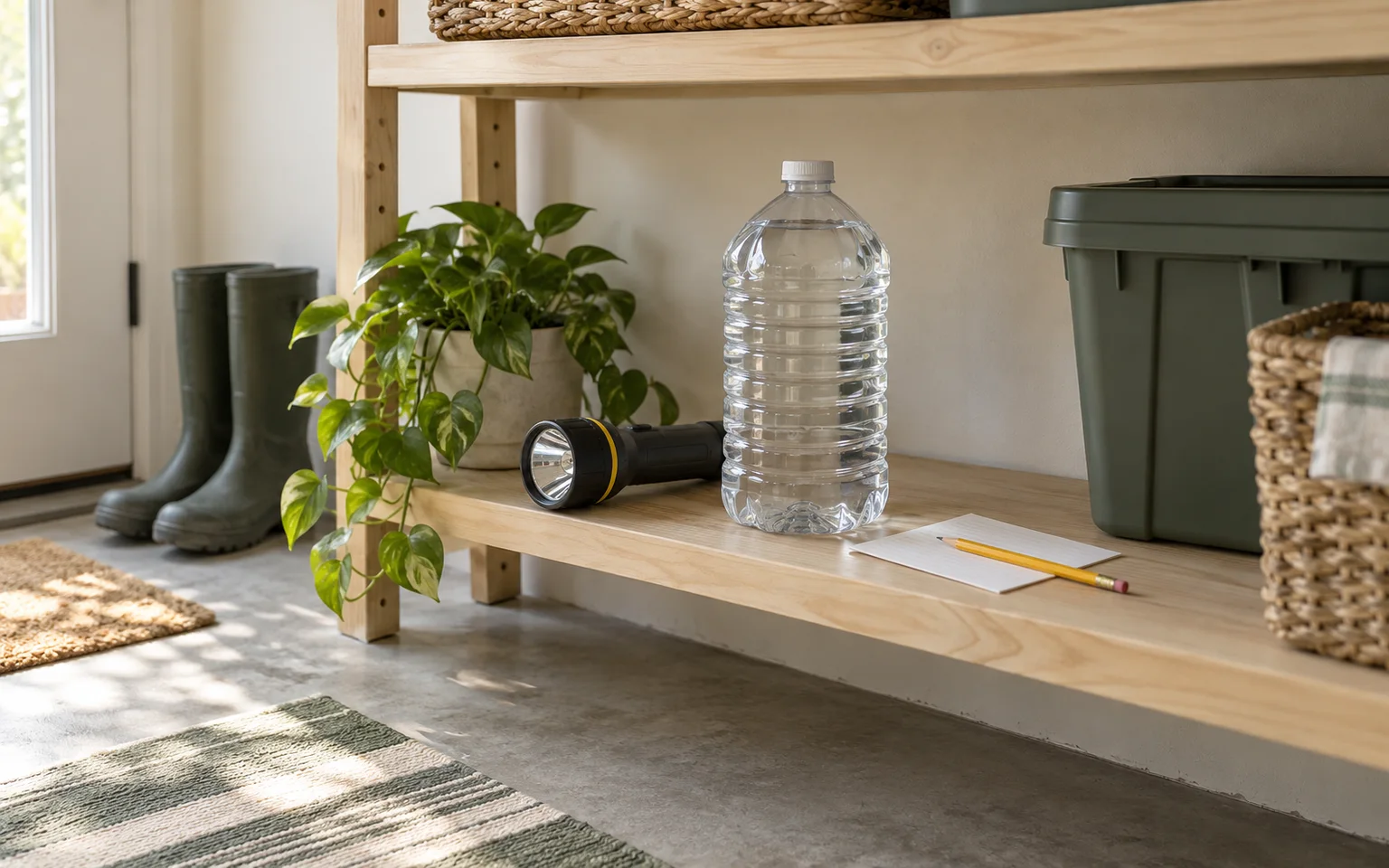
Start with four questions: Is this commercially bottled water or water filled at home? What date or expiration information is on it? Is the container and closure intact? What happened to it during storage and use? If any answer is uncertain, or a water advisory is active, stop treating inspection as proof of safety and follow the responsible water authority, public-health office, or manufacturer.
Begin with the kind of water you have
Separate store-bought bottles from containers your household filled. They have different maintenance directions, and mixing them into one rule creates avoidable confusion.
For commercially bottled water, read the printed expiration information and package instructions. The date is one part of the decision, not a guarantee that a damaged or contaminated package is suitable for drinking. FEMA’s preparedness guidance recommends commercially bottled water for an emergency kit. Keep the bottles together so you can read the labels and rotate them without opening a package just to check it.
For water filled at home, look for the date your household wrote on the container. CDC says to replace household-filled stored water every six months. That direction applies to water filled by the household, not as a universal expiration promise for every commercial bottle. Home-filled water should be in an FDA-approved food-grade container with a tight lid. If you cannot confirm that the container is food-grade, contact its manufacturer before relying on it for drinking water.
If you need the larger picture before making a decision, review household water basics. It can help you separate routine storage planning from decisions caused by an active interruption.
Check the package before opening it
Inspect the label, cap or closure, and container itself. You are looking for conditions that change the next action, not for a visual test that clears the water.
- Is the cap or seal intact?
- Is the label still attached and readable?
- Is there a crack, puncture, leak, split seam, bulge, or other physical damage?
- Has the container been exposed to heat or direct sunlight?
- Could it have contacted gasoline, pesticides, cleaning chemicals, or another toxic substance?
- Is the shelf, floor, or cabinet strong and stable enough for the water’s weight?
A compromised closure or container is a stop sign for drinking use. Known contact with a chemical or floodwater is also a stop sign. Set it aside and seek instructions that match the actual incident from the manufacturer or responsible public-health authority. Do not try to clear the water by judging its appearance or by inventing a home treatment sequence.
Water is heavy. EPA notes that a gallon weighs more than eight pounds. A shelf that holds dry goods may not be suitable for several gallons, especially if it is high, narrow, or already bowed. A stable location also lowers the chance that a leak will damage other supplies. Water storage in a small home covers ways to think about weight, light, temperature, and available space together.
Review the storage environment
CDC recommends storing household-filled water in a cool place, around 50°F to 70°F, away from direct sunlight and separate from toxic substances. Check the actual location, not only the container. A bottle that began in a suitable cabinet may now sit beside fuel, under a leaking pipe, or in a space that receives afternoon sun.
Look for heat sources, dampness, pests, spilled products, and signs that the container has been moved or dropped. Keep water away from chemicals even when both are closed. If the container has been exposed to a known contaminant, the question is no longer whether it looks normal. It needs a specific disposition from the authority or manufacturer connected to that hazard.
Do not transfer water into a different container just because the current one is inconvenient. Moving it adds handling and creates a new record problem. If you do replace household-filled water as part of the six-month cycle, use a clean food-grade container, label it “drinking water,” add the storage date, and close it tightly.
Ask what happened after storage
A closed container has a different history from one that has been opened repeatedly. Record whether the container was opened, when it was opened if known, and how water was removed. CDC advises using a clean scoop or other clean device each time, avoiding contact with hands and the inside of the container, and never scooping with hands.
That advice controls handling. It does not certify that older water remains safe simply because the cap was replaced. If the opening, scoop, or dispensing history is uncertain, keep the water out of drinking use until you have a supported answer. Follow product directions for commercial water and local instructions for an affected water system.
An inspection record can be brief: type, date, container condition, storage location, opening history, and next action. A note such as “home-filled, dated April 10, intact, cool cabinet, unopened, replace October 10” gives the next person a usable decision. “Looks fine” does not.
Do not use your senses as a clearance test
Clear water, a normal color, no odor, or an ordinary taste cannot certify that water is safe to drink. Conversely, an unusual appearance or odor is a reason to stop, not a reason to diagnose the problem at home. Do not taste water to decide whether it is safe.
Boiling or disinfection can address some disease-causing microorganisms, but EPA says those methods do not destroy heavy metals, salts, or most chemicals. That is why a chemical exposure, flood contamination, or do-not-drink notice requires incident-specific instructions. Improvised treatment can make a bad decision harder to see.
The same boundary applies when a container is within its printed date. Date, seal, and storage history help classify the water. None of them replaces instructions for a current contamination event. If a notice says “Do Not Drink,” use the water source the notice names, such as bottled water, and wait for the issuing authority’s instructions. Water during a boil-water advisory explains why advisory types matter and why boiling guidance cannot be transferred to every notice.
What to do when the answer changes
Use the condition that actually applies:
- Commercial bottle, label readable, intact package, suitable storage: keep it in rotation according to the label and package directions. Continue protecting it from heat, sunlight, and toxic substances.
- Home-filled water at or beyond six months: replace it with freshly prepared, labeled water in a food-grade container. The six-month direction is for household-filled water.
- Broken seal, leak, crack, puncture, bulge, or unknown container material: do not use it for drinking until the manufacturer or responsible authority gives a supported disposition.
- Known chemical, flood, sewage, or toxic exposure: stop using it for drinking and contact the responsible authority. Do not attempt to rescue it with a smell test or improvised treatment.
- Active boil-water, do-not-drink, or do-not-use advisory: follow the issuing water system or health authority. The notice type controls what water uses are allowed.
- Uncertain handling or dispensing: set the water aside and confirm the next step rather than treating normal appearance as clearance.
This is a bounded decision. It is acceptable for the result to be “confirm first.” That record protects the household from turning uncertainty into a drink, and it keeps a clear bottle from receiving more confidence than the evidence supports.
A repeatable inspection record
Keep one line for each container or grouped set:
- Water type: commercially bottled or filled at home.
- Date: printed expiration information, or household fill date.
- Container: label readable; cap or seal intact; no leak, crack, puncture, bulge, or unknown contact.
- Storage: cool, out of direct sun, away from toxic substances, and on a stable surface.
- Handling: unopened or opened; clean dispensing device used; no hand contact with the water or inside.
- Current notice: no advisory, or the exact advisory name and issuing authority.
- Next action: rotate, replace, set aside, or follow named instructions.
Date the record and review it when you rotate supplies, after moving containers, and when local officials issue a water notice. The goal is not to make a guess sound precise. It is to know what you have, what condition it is in, and when the decision belongs to someone with incident-specific information.
Frequently asked questions
Does a sealed bottle within its expiration date automatically make safe drinking water?
No. Follow the printed date and package directions, while also checking the seal, container integrity, storage conditions, and any current advisory. A date cannot clear a damaged package or known contamination.
Does the six-month replacement direction apply to every bottle of water?
No. CDC’s six-month direction applies to water filled and stored by the household. For commercially bottled water, use the printed expiration information and package instructions, without treating the date as a complete safety test.
Should I smell or taste stored water before using it?
No. Appearance, odor, and taste cannot certify safety, and you should not taste water as a test. An unusual change means stop using it for drinking and obtain instructions that fit the product or incident.
Can I boil water that may have chemicals in it?
Do not assume boiling makes chemically affected water safe. EPA says boiling or disinfection does not destroy heavy metals, salts, or most chemicals, so follow the current authority’s instructions for the specific hazard.
What if a boil-water notice starts while my stored water is at home?
Read the notice type and follow the issuing authority’s directions. A boil-water advisory, do-not-drink notice, and do-not-use notice have different boundaries; stored water with an uncertain history should not be treated as automatically suitable.
The useful inspection is the one you can repeat: identify the water, read the date, check the container and storage history, record how it was handled, and stop when the facts no longer support a household decision. That small record makes the next rotation clearer and leaves room for official instructions when the situation changes.