
When a notice arrives, first identify its exact type. A boil-water advisory usually means germs may be present, so use bottled water or bring tap water to a full rolling boil for 1 minute, then let it cool. Above 6,500 feet, boil for 3 minutes. A do-not-drink or do-not-use notice has different, stricter limits. Boiling cannot make water with fuel, toxic chemicals, radioactive material, or other harmful chemicals safe. The current notice from your water utility or public-health authority controls every unlisted use.
Start with the words on the notice
Do not treat every water notice as a boil-water advisory. Read the heading, affected area, reason, permitted uses, and the instructions for ending it. Save the notice or write down the utility and health-department phone numbers. A neighbor’s message or an old alert may not cover your address.
During a boil-water advisory, the practical change is to use commercially bottled water or correctly boiled and cooled tap water for drinking, cooking, preparing drinks, washing produce, making ice, and brushing teeth. A home pitcher or refrigerator filter does not replace boiling. If the notice says do not drink, use commercially bottled water for these activities because boiling does not remove chemicals or toxins. A do-not-use notice means no tap-water use or contact while it is active. Follow the issuing authority for bathing, handwashing, laundry, and other activities.
If the notice names a chemical, sewage, fuel, or another contaminant, set aside general boiling advice. The water system or health authority’s specific direction takes priority. Ask about any task the notice does not address.
For background on ordinary storage, use Household water basics. It helps you separate everyday supply planning from an active advisory.
Change the uses that affect eating first
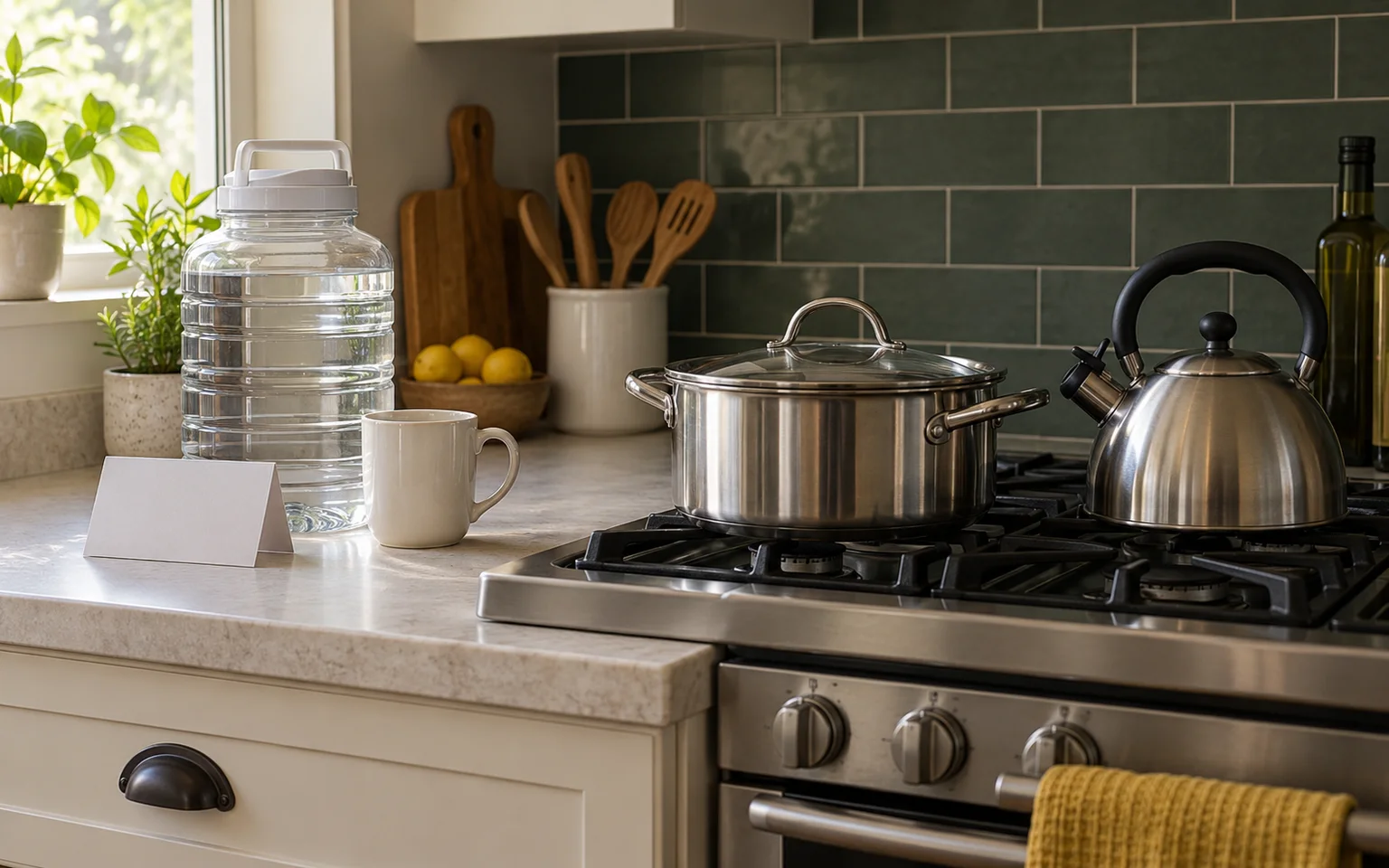
Set aside safe water before you start cooking. Label a clean pot, covered container, or purchased bottles for drinking and food. Count water for coffee, tea, soups, rice, pet food, and medicines that must be taken with water. Use safe water to wash fruits and vegetables, rinse utensils that touch food, and prepare powdered drinks. Do not assume a food will become safe because it will be heated later. Start with safe water at each step.
Ice needs the same care. Throw away ice made from tap water after the advisory began, including ice in an automatic maker, dispenser, cooler, or freezer tray. Use commercial ice or ice made with bottled or properly boiled water. Coffee makers, refrigerator dispensers, vending machines, soda machines, and other water-line appliances may retain contaminated water. The utility or appliance maker may give a specific cleaning, flushing, or filter-replacement procedure. Until you have that instruction, use another safe source.
Brush teeth with bottled or boiled-and-cooled water. Keep a separate cup or bottle in the bathroom so a tired person does not reach for the tap by habit. If someone swallowed tap water before the notice, follow the health authority’s advice about symptoms and care. Do not turn a general article into a substitute for local medical guidance.
Infant feeding needs a separate safety check
Ready-to-feed liquid infant formula is the safest option when tap water is unsafe. Use bottled water for powdered formula until local officials say tap water is safe. When bottled water is unavailable and the concern is biological rather than chemical, CDC provides options for boiling or disinfecting water. Let boiled water cool before mixing, and follow the formula label’s exact water and powder amounts.
For a baby younger than 2 months, born prematurely, or with a weakened immune system, CDC gives an additional Cronobacter precaution. Boil the water, wait about 5 minutes before mixing powdered formula, and cool the prepared formula before feeding. This is a separate infant-formula instruction. Do not combine its waiting time with the advisory’s rolling-boil time. If the notice involves chemicals or toxins, do not use boiling or disinfection as a substitute for bottled water and official instructions.
Clean bottles, nipples, cups, utensils, and preparation surfaces with safe water. When water is limited, use ready-to-feed formula and follow CDC’s emergency cleaning directions. A pediatrician, public-health office, or infant-feeding professional can help with a higher-risk infant or a feeding problem that the notice does not answer.
Keep pets and special needs in the plan
Give dogs, cats, and other household animals bottled or boiled-and-cooled water during a boil-water advisory. Use the same safe source for wet food, reconstituted food, treats that need water, and ice. Do not assume an animal will avoid unsafe water on its own. Empty outdoor bowls and refresh them with safe water.
Aquatic pets, reptiles, amphibians, birds, livestock, and animals with medical needs may require different steps. A contaminant can affect species differently. Prevent exposure and ask a veterinarian or the issuing authority what applies. During a do-not-drink notice, use commercial bottled water for pets. During a do-not-use notice, prevent tap-water contact and follow the local instructions for every animal.
The same planning applies to people who need water for medication, feeding equipment, mobility support, or another daily task. Keep the exact product or clinician directions beside the safe water. If a device connects to water, ask its manufacturer or care team about use during the notice. Water planning for pets and additional household needs can help you list these uses before an interruption occurs.
Contact uses are not all the same
During many boil-water advisories, adults and older children can wash hands with tap water and soap, but local officials may give stricter directions. If extra caution is advised, use bottled, boiled, or disinfected water. Do not swallow water while washing.
Bathing and showering depend on the notice and the person. During a boil-water advisory, adults and older children may be allowed to shower if they avoid swallowing water. Protect babies and young children from drinking bath water. A sponge bath with safe water is a reasonable alternative. Do not bathe in water that may contain sewage or toxic chemicals.
Laundry may be allowed during a boil-water advisory when the water is not cloudy, but the local notice controls. Dishwashing and cleaning food-contact surfaces require safe water unless the authority gives a specific alternative. A do-not-drink notice may permit some handwashing, bathing, laundry, or toilet flushing, but only when the contaminant-specific instructions say so. A do-not-use notice prohibits tap-water contact, including skin, eyes, and lungs. Read the exact boundary rather than guessing from the name of the notice.
Check appliances and stored water
Make a short household check and keep it near the sink:
- Drinking, cooking, produce, medicines, and pet water use bottled or properly boiled-and-cooled water during a boil-water advisory.
- Ice, teeth, formula, bottles, and food-contact items use the same safe source.
- Handwashing, bathing, laundry, dishes, toilets, and cleaning follow the specific local notice.
- Water-line appliances wait for utility or manufacturer directions.
- The advisory remains active until the issuing authority gives the all-clear.
If you have stored water, inspect the container before using it. A seal, label, date, storage condition, and unusual damage can change the decision. How to inspect stored water without guessing gives a focused check for water you already have. Do not use stored water simply because it looks clear, and do not use a container that may have been exposed to chemicals.
Keep enough safe water available for the advisory’s duration, but do not invent a deadline for the utility. If supply is tight, reserve bottled or boiled water for drinking, food, formula, teeth, medicines, and pets first. Ask the authority where residents can obtain safe water if your household cannot boil, carry, store, or access enough.
Wait for the official all-clear
Water can look and smell normal before an advisory ends. Resume normal use only after the issuing authority says the notice is over. The utility may tell you to flush faucets, service lines, water heaters, ice makers, filters, or other appliances. Flushing time varies with plumbing and the outlet, so follow the exact sequence and duration provided for your system.
Replace ice made during the advisory. Clean or replace filters only as directed. If a notice involved chemicals, do not assume a routine flush makes every fixture safe. Ask the utility what to do with water heaters, washing machines, humidifiers, and other equipment.
Questions people often ask
Does boiling make every unsafe advisory safe?
No. Boiling can kill many germs, but it does not remove fuel, toxic chemicals, radioactive material, or other harmful chemicals. Use bottled water and follow the contaminant-specific direction for a do-not-drink or do-not-use notice.
Can I use a pitcher filter during a boil-water advisory?
Not as a replacement for boiling. Common household filters may not remove bacteria or viruses, so use bottled water or boil tap water according to the notice.
Can I wash my hands with tap water?
Often, yes, during a boil-water advisory when local officials allow it. Use soap, avoid swallowing water, and follow stricter local directions if the notice concerns chemicals, sewage, or a do-not-use condition.
What should I do with ice from before the notice?
If you cannot tell when the ice was made, treat it as tap-water ice made during the advisory. Discard it and use commercial ice or ice made from a safe source.
How do I know when normal use can resume?
Wait for the water utility or public-health authority’s all-clear. Looking or smelling normal is not enough. Follow any required flushing, cleaning, or filter instructions before reconnecting water-line appliances.
The useful sequence is simple: identify the notice, protect drinking and food uses, separate infant-formula instructions, prevent unsafe pet or household contact, and wait for the official all-clear. Keep the current local notice beside this page, because its contaminant, area, permitted uses, and ending steps control your home.