
The one-gallon-per-person-per-day figure is a starting point, not a complete household water plan. Begin with that baseline, then record separate needs for pets, infant feeding, access, medicines, powered equipment, cooking, sanitation, and hot conditions. The right amount and water source depend on the people and animals in your home, the instructions that apply to their supplies, and any current local advisory.
Start with a household-specific water list
Household water basics explains the general planning baseline and ordinary uses such as drinking, cooking, and brushing teeth. Use it as the first line on your worksheet, then add the uses that the baseline cannot describe for your household.
Write down each person, each pet, and each activity that requires water. Include drinking, food preparation, tooth brushing, formula preparation, medicine use when directed, cleaning equipment, and basic sanitation. Note which uses require potable water and which depend on a local instruction. Keep the list separate from a simple storage total so a change in one need does not disappear inside a single number.
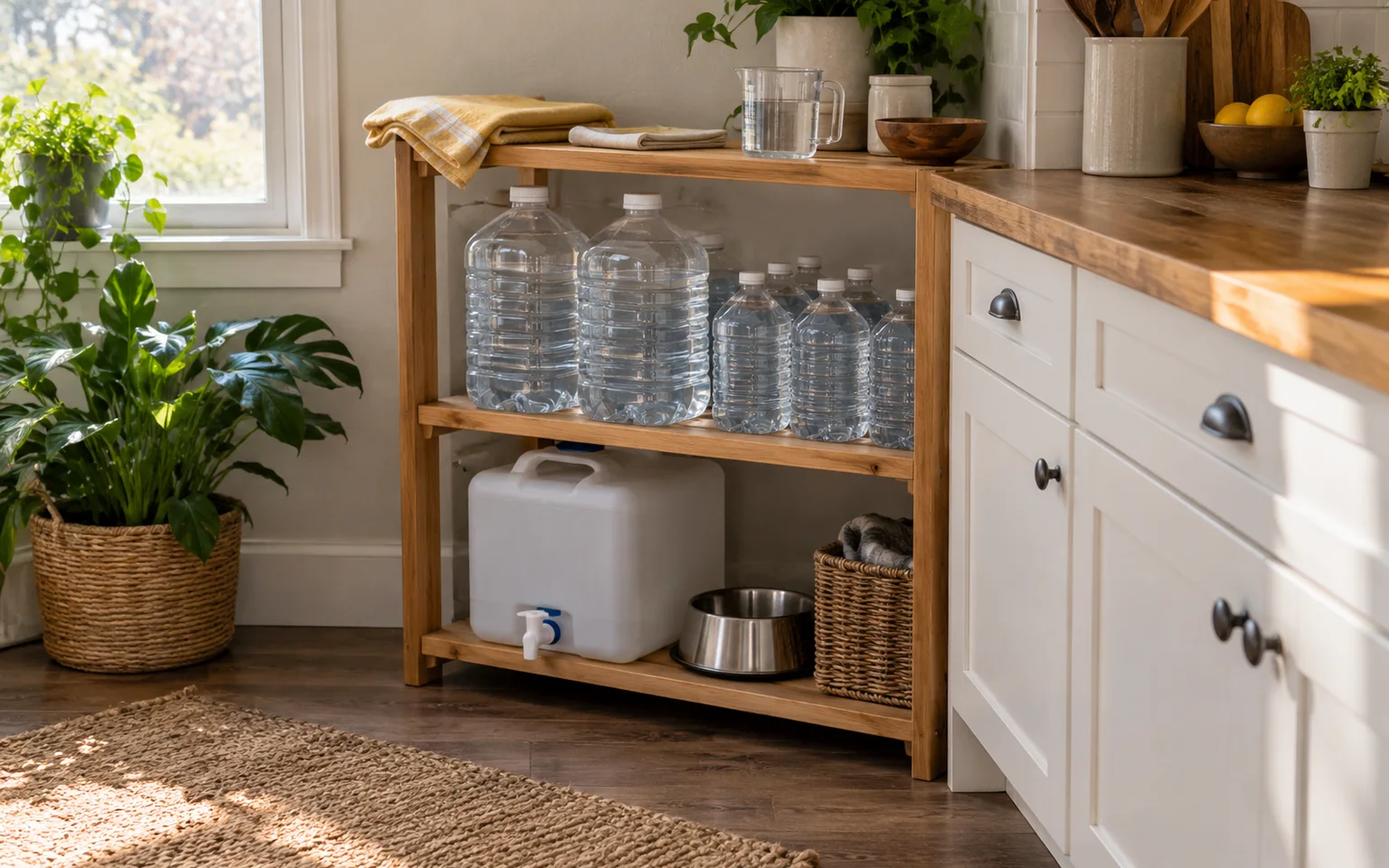
CDC recommends at least one gallon of water per person per day for at least three days and says to try to store a two-week supply if possible. It also says to consider storing more for pregnant people, people who are sick, pets, and homes in hot climates. That recommendation does not calculate an animal's species, size, diet, health, medication, sanitation, or activity. It also does not calculate infant-feeding, equipment, access, or climate conditions in your home. Water storage in a small home can help you decide where separate containers can be reached and checked.
If money or space is limited, record the needs before buying anything. You can then prioritize safe drinking and required preparation, choose more than one storage location, and ask a local emergency authority about available water distribution. A written plan also helps another person provide the right water when you are tired, away, or unable to explain every detail.
Pets need their own care check
Include pets in the household plan and take them during an evacuation when possible. FEMA pet-preparedness material recommends planning for food, bottled water, medications, veterinary records, bowls, litter or other sanitation supplies, identification, a carrier or restraint, and familiar items. Keep an extra supply of a pet's regular medicine in a waterproof container when your veterinarian has prescribed it.
Do not turn the human baseline into a pet-water rule. Water needs vary with the animal, size, diet, health, weather, and activity. Use the animal's normal care instructions and ask the veterinarian for the amount and any changes that apply to your pet. Record that amount separately, along with the water needed for food preparation, medicine, cleaning, and sanitation.
Test the setup at home. Can the person who normally cares for the animal find, open, lift, pour, and measure the water? Can the pet drink from the planned bowl if the usual bowl is lost? Keep records and identification where they can travel with the animal. If evacuation or relocation is possible, include the water and restraint plan in the carrier or transport checklist.
An advisory changes pet water too. During a boil-water advisory, CDC says pets should receive commercially bottled water or boiled tap water that has cooled. During a do-not-drink advisory, use commercially bottled water for pets because boiling does not remove harmful chemicals or toxins. A do-not-use advisory means tap water must not contact the pet or its supplies while the notice is active. Read Water during a boil-water advisory before deciding which stored water can be used.
Infant feeding has exact instructions
If an infant uses formula, keep feeding instructions with the water plan. CDC identifies ready-to-feed liquid infant formula as the safest emergency option because it is sterile and does not require added water. If powdered formula is used while tap water is unsafe, CDC directs families to use bottled water until local authorities say the tap water is safe, or to make water safe using current boiling or disinfection instructions.
Use the exact water and formula amounts printed on the container label, and measure the water first. Too much or too little water can make an infant sick. Do not dilute formula, make a homemade substitute, or improvise a recipe. A baby younger than two months, a baby born prematurely, or a baby with a weakened immune system may need extra precautions. Follow the current CDC directions and the infant's care instructions for those situations.
Prepared formula should be used within one hour from the start of feeding and within two hours of preparation, or refrigerated immediately and used within 24 hours. During a power outage without a working refrigerator, prepare fresh formula for each feeding. Add these time and temperature limits to the worksheet, and note where clean water, measuring supplies, and a safe preparation surface are kept.
Water contaminated with fuel, toxic chemicals, or radioactive material cannot be made safe by boiling or disinfecting. Use bottled water or another safe source and follow the local public-health instruction. If the notice is unclear, contact the responsible utility or health department before preparing formula.
Plan access, medicines, and equipment
A water plan works only if the intended user can reach and use it. Store some water where the people who need it can find it without climbing, lifting beyond their ability, or crossing a blocked route. Test opening, carrying, pouring, and measuring with the actual containers. If the usual method does not work, record who can help and what alternate serving method the household has already tested.
FEMA lists prescription medicines, eyeglasses, contact-lens solution, hearing-aid batteries, infant supplies, pet supplies, and other special-needs items as emergency-kit considerations. Put the relevant instructions and contact names with the water worksheet, while protecting private health information. A short note can identify the medicine or equipment, its water or temperature requirement, the responsible clinician or provider, and the date to review it.
Do not change a medicine because a disruption makes water or refrigeration difficult. CDC heat guidance notes that some medicines can increase dehydration or overheating risk, some need protection from heat, and households should plan for refrigerated medicines and electronic medical devices during power outages. Ask the prescribing clinician or pharmacist about heat, refrigeration, fluid limits, or water used with a medicine. Keep the medicine's own storage instructions with the supply.
Powered equipment may need water for cleaning or operation, but the amount and procedure depend on the exact device. Ask the equipment provider or care team what water, cleaning, charging, backup power, and temperature conditions apply. Record whether the plan needs a charged battery, a generator or other backup power, refrigeration, a safe place to operate, and a contact who can help. Do not substitute a generic device procedure for the manufacturer's or clinician's directions. For related planning, see Power-dependent household needs.
Hot conditions change more than the quantity
CDC advises considering more water for homes in hot climates. On hot days, the plan may also need a cooler storage location, a way to check on people and pets, and a decision about where the household can stay if indoor conditions become unsafe. Follow current heat-health and emergency instructions when a local authority directs cooling, relocation, or a different water source.
Store home-filled water in a cool place between 50°F and 70°F, protected from direct sunlight and away from toxic substances, as CDC advises. Check the storage location rather than assuming a shaded room stays within that range during a prolonged outage. Keep required medicines and equipment under their own temperature instructions. A pet carrier, infant supplies, and water containers may also need to move if the home becomes too hot.
Heat can increase water use through activity, feeding, cleaning, and animal care. Do not invent a single hot-weather amount for everyone. Ask the relevant clinician or veterinarian for person- or pet-specific directions, and follow public-health advice for heat illness. If someone has symptoms of a heat emergency, contact emergency services or the appropriate local health authority.
Treat advisory types as different instructions
The words on a notice control what water can touch and what it can be used for. During a boil-water advisory, use commercially bottled water or boil tap water as directed for drinking and cooking, then let it cool where the instruction requires. During a do-not-drink advisory, use commercially bottled water for drinking, cooking, brushing teeth, preparing formula, making ice, and giving pets water. Boiling does not remove harmful chemicals or toxins.
A do-not-use advisory is broader. Do not use tap water for contact while it is active, including the contact that an animal, infant-feeding item, medicine preparation, or device-cleaning step would have. Do not assume a familiar household use remains allowed because the water looks clear. Check the current notice from the responsible utility, health department, or emergency authority, including instructions for private wells and building plumbing.
Keep emergency water clearly separated from water with a restricted use. Label containers in plain language, and write the advisory contact on the worksheet. When the notice ends, wait for the authority's instructions before returning to normal use. Water during a boil-water advisory covers the household decisions that follow a boil-water notice.
A small household water worksheet
Use one page that another adult can read without asking you to remember details. Review it when a person, pet, medicine, device, season, or storage location changes.
- People: Name or household role, ordinary water uses, access support, and a helper's contact.
- Pets: Animal, normal care instructions, separate water amount from the veterinarian, food and medicine needs, bowls, sanitation, records, and transport plan.
- Infant feeding: Formula type, safe water source, label instructions, preparation and refrigeration limits, and current care directions.
- Medicines: Storage temperature, refrigeration, water used with the medicine when instructed, prescribing clinician or pharmacist, and review date.
- Equipment: Device name, water or cleaning instructions from the provider, power and charging needs, refrigeration, backup contact, and review date.
- Access: Where water is stored, who can open and carry it, how it is poured or measured, and what happens if that person is away.
- Conditions: Hot-weather location, cooling or relocation plan, current utility or health-department contact, and private-well information if relevant.
- Water status: Containers available, uses allowed, advisory type if one is active, and the date the instructions were last confirmed.
Keep the page with the supplies, and place a copy where a helper can find it without exposing private health details. Review it after a move, a new pet, a change in formula, a medicine change, new equipment, or a change in who provides care.
Frequently asked questions
Does one gallon per person include pets?
It is a human planning baseline for drinking, cooking, brushing teeth, and other needs. Record pet water separately using normal care instructions and veterinary direction because animal needs differ.
What changes for infant formula?
Use ready-to-feed liquid formula when available during an emergency, or follow current CDC directions, the container label, and local water instructions for powdered formula. Measure water first, keep the stated preparation limits, and prepare fresh formula when refrigeration is unavailable.
What if water is unsafe because of chemicals?
Do not rely on boiling or disinfection for water contaminated with fuel, toxic chemicals, or radioactive material. Use bottled water or another authority-approved safe source and follow the current local notice.
How do I plan for medicines or powered equipment?
Write down the exact storage, water, cleaning, charging, and refrigeration instructions for each medicine or device. Ask the prescribing clinician, pharmacist, equipment provider, or care team about the conditions that apply, and keep backup contacts with the plan.
What changes in hot weather?
CDC says to consider more water for homes in hot climates, and heat may change storage location, cooling, medicine, and equipment plans. Follow current heat-health guidance and ask the relevant clinician or veterinarian for individual directions.
Your worksheet is the practical bridge between a general baseline and the way your household actually lives. Keep the baseline, add each separate need, test access, and update the instructions that control formula, pets, medicines, equipment, heat, and advisories. This is planning information, not personalized medical or veterinary advice. Current local notices and exact product, medication, equipment, formula-label, clinician, and veterinary instructions take priority.